
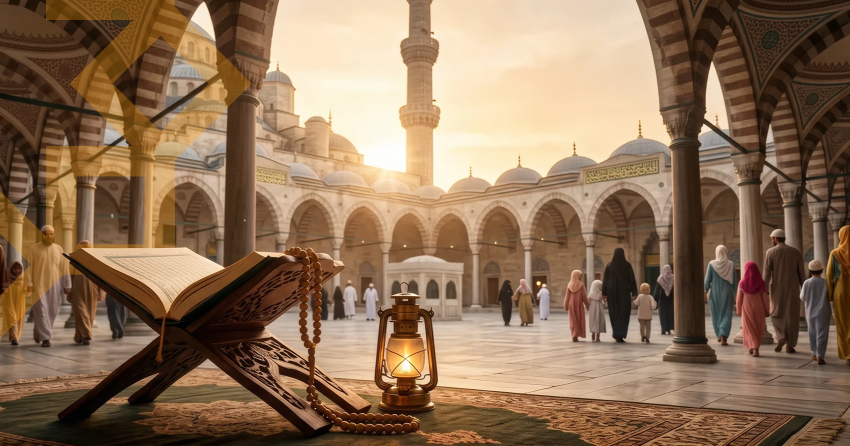
Rabi ul Awwal is the third month of the Islamic calendar and is a sacred month for the whole Ummah. It is a month of remembrance, thankfulness and reflection on the life of the man who was sent as a mercy to all the worlds.
This year, 12th Rabi ul Awwal 1448 AH is expected to fall on Tuesday, 25 August 2026 in the UK, subject to moon-sighting confirmation.
For Muslims worldwide, this day marks the birth of Prophet Muhammad (PBUH) and is popularly known as Mawlid al-Nabii. But this is more than a day on the calendar. It is a living opportunity, a chance to revive the mercy, humility and generosity that were hallmarks of the Prophet’s character and to put that love into action for those most in need.
Historic Significance of Rabi ul Awwal
Rabi ul Awwal marks the moment the world was forever changed by the arrival and journey of the Prophet Muhammad (PBUH).
The Birth of the Beloved Prophet
Prophet Muhammad (PBUH) was born in Makkah, Arabia, on a Monday. While the Prophet (PBUH) confirmed that he was born on a Monday and would fast on that day in gratitude to Allah, the exact date of his birth is not explicitly recorded in authentic hadith.
The majority of historians and Islamic scholars, however, place his birth on the 12th Rabi ul Awwal and hence recognise the date for the commemoration of Eid Milad un Nabi.
The occasion reminds Muslims to reflect on the Prophet’s (PBUH) noble character, his mercy, compassion, and the timeless guidance he brought to humanity rather than focusing solely on the historical date.
Lineage and Early Childhood
Prophet Muhammad (PBUH) was born into the noble Quraysh tribe, with a lineage tracing back to Prophet Ibrahim. His father, Abdullah ibn Abd al-Muttalib, passed away before his birth, leaving Muhammad (PBUH) an orphan from the very beginning of his life. His mother, Aminah bint Wahb, cared for him during his early years. At the age of six, his mother also passed away while returning from Yathrib (later Madinah), leaving him without either parent. His grandfather, Abd al-Muttalib, and later his uncle, Abu Talib, raised him and provided him with love, protection, and support. Abu Talib remained one of the Prophet’s (PBUH) strongest supporters throughout the early years of his mission.
After Abu Talib passed away, the Prophet (PBUH) faced even greater hardship as opposition from the Quraysh intensified. Allah guided the Prophet (PBUH) to migrate, marking the beginning of a new chapter for the Muslim community.
The Hijrah: A Defining Moment in Rabi ul Awwal
Rabi ul Awwal has a second, equally profound significance. It was also the month of the Hijrah, the migration of the Prophet (PBUH) from Mecca to Medina. The journey began during the final days of Safar and concluded on the 12th of Rabi ul Awwal, when the Prophet (PBUH) arrived safely in Medina after enduring persecution and hardship for the sake of Allah. The Hijrah marked the establishment of the first Muslim community and laid the foundations of an Islamic society built upon faith, justice and brotherhood. This reminds us that Rabi ul Awwal is not only a month to remember the birth of the Prophet (PBUH), but also a time to reflect on his sacrifice and unwavering trust in Allah.
His arrival was met with immense joy as the people of Medina welcomed him with heartfelt greetings and words of praise:
Tala‘a al-badru ‘alayna, min thaniyyat al-wada‘
Wajaba ash-shukru ‘alayna, ma da‘a Lillahi da‘. ( (Al-Baihaqi)
These verses express the overwhelming joy and gratitude felt by the people of Madinah, comparing his arrival to the light of a full moon illuminating their lives. Today, Muslims around the world continue to recite this during many Milad un Nabi gatherings to celebrate and remember the legacy of the Prophet Muhammad (PBUH).
Donate your zakat
Fulfil your obligation today – give Zakat and be a source of hope for those in need!
Recommended Acts: Turning Love into Action
The best way to honour the Prophet (PBUH) is not with words but with the actions of his Sunnah. Here are three ways to make the most of this blessed period.
1. Mawlid un Nabi Fasting
Many Muslims fast on this day, following the example of the Prophet (PBUH) himself.
Fasting on Mawlid un Nabi is a deep personal thanksgiving, a way of celebrating the significance of the day, both physically and spiritually.
2. Reviving the Prophetic Character
Besides fasting, this is a beautiful time to reconnect with the Seerah, the biography of the Prophet’s life. To read of his patience, his mercy toward enemies, and his gentleness with the vulnerable can rekindle our own sense of purpose.
Another simple but powerful act of worship is to send blessings (salawat) on the Prophet (PBUH). And perhaps more than anything, it is time to follow his example in our day-to-day life: small acts of kindness, patience and honesty in his name. Or we can show his mercy by making a donation to the poor. We pool our resources and give through trusted Muslim charities such as United Muslims so that our donations are managed transparently and reach the most vulnerable Muslim communities in keeping with the values of Islam.
3. Generosity in Giving
The Prophet Muhammad (PBUH) was described as mercy to the world, and his own life was characterised by great generosity, even in times of hardship. He gave without fear of poverty, and he taught that the believer’s charity is a shield and a source of protection. There is no more fitting way to honour his legacy than to give charity in Rabi ul Awwal.
Note for GD: A street decorated for Milad Nabi where someone is offering food to a beggar or needy person
Whether you fulfil your Zakat or give Sadaqah, your support can help educate children in remote areas and provide food for hungry families in Muslim communities across the globe.
Offering Sadaqah in Rabi ul Awwal is another way to multiply your rewards during this blessed month, while directly easing the burden of families facing hunger, displacement, or hardship around the world.
Honour His Legacy Online Today
Learning about the Prophet’s mercy is only the first step. Acting upon it is what brings that mercy to life.
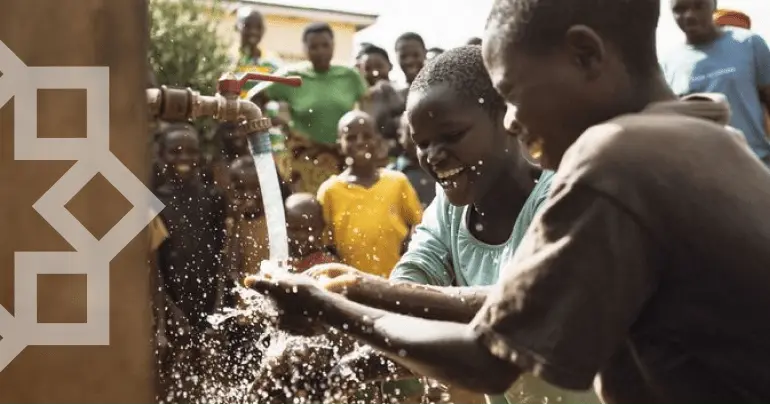
This Rabi ul Awwal, donate your Sadaqah online with United Muslims and witness your generosity impact families in Gaza, Pakistan and other communities in desperate need through emergency relief, orphan support or sustainable water projects that make a difference for generations.
Donate Sadaqah today and carry on His(PBUH) legacy.
Bringing hope through small acts of kindness—a meal, a helping hand, or a gift can light up a child’s day.
