
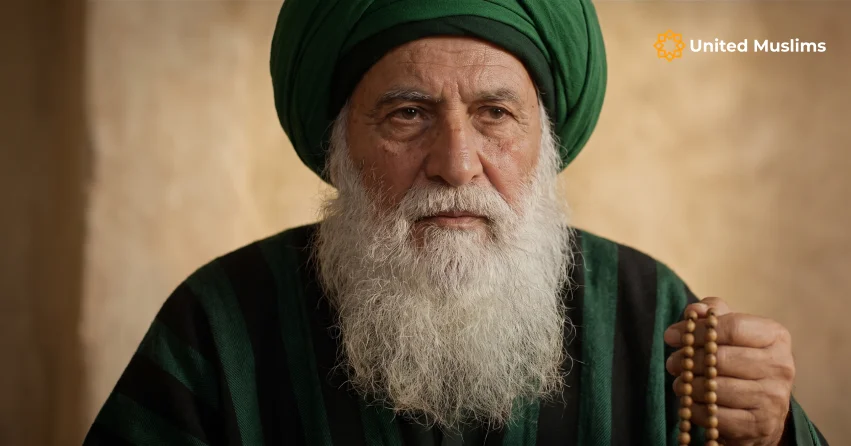
Some lives are remembered for what a person achieved. Others are remembered for the values they left behind. Sheikh Abdul Qadir Jilani belongs to the latter group. Born in Gilan and later travelling to Baghdad, he devoted much of his life to Islamic learning, teaching and spiritual guidance.
The story of Abdul Qadir Jilani is one of a young seeker who travelled far from home in search of knowledge and eventually became a respected scholar and preacher. His life, writings and teachings continued to influence Muslims long after his death, making his legacy worth understanding today.
Who Was Abdul Qadir Jilani?
Abdul Qadir Jilani, also known as Abd al-Qadir al-Jilani, was born in Gilan, south of the Caspian Sea, around 1077–78 CE. He later moved to Baghdad to study Islamic law and other religious sciences, and became known as a Hanbali scholar, preacher and spiritual teacher. His reputation grew through his sermons, and a school and hospice were eventually established for him, his family and his students. His influence reached people from all walks of society.
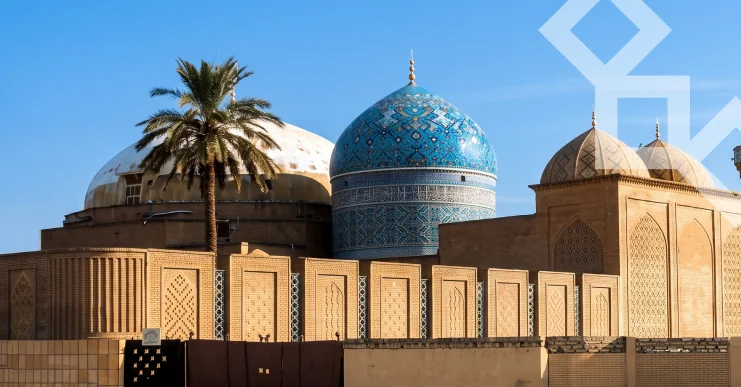
He died in Baghdad in 1166 CE and was buried there. Over the centuries, his name became closely connected with the Qadiriyya spiritual tradition, which later spread across different parts of the Muslim world.
Donate your zakat
Fulfil your obligation today – give Zakat and be a source of hope for those in need!
From Gilan to Baghdad: The Journey of a Seeker of Knowledge
At eighteen, Abdul Qadir Jilani made a difficult choice: he left his home in Gilan for Baghdad, the centre of Islamic learning. There he studied Hanbali law and Islamic spirituality under renowned teachers, immersing himself in years of intense learning and discipline.
Historical accounts describe long periods of seclusion during these early years, times of spiritual reflection before he finally emerged as a public teacher. His influence was built on years of learning and sacrifice of personal comfort for genuine knowledge. This foundation became the source of everything he achieved later.
What Made Sheikh Abdul Qadir Jilani a Respected Scholar?
He became widely known for his public sermons and teaching in Baghdad. When he returned to public life around 1127, his sermons attracted large audiences, and many people became his students.
His strength as a teacher was not simply his knowledge of religious subjects. His preaching connected religious learning with personal conduct, encouraging people to examine their intentions, worship Allah sincerely and become more disciplined in their everyday lives. His influence spread through his students and writings, becoming a legacy that endured for centuries.
The Core Teachings That Shaped His Legacy
Sheikh Abdul Qadir Jilani’s teachings, commonly associated with his sermons and writings, focus on the inner life of a believer as well as outward acts of worship.
Sincerity was central. A good deed is not only about what a person does, but also why they do it. This closely aligns with the famous Hadith in which the Prophet Muhammad (PBUH) taught that actions are judged by intentions. The Prophet Muhammad (PBUH), as related by Umar b. al-Khattab, said:
“(The value of) an action depends on the intention behind it. A man will be rewarded only for what he intended.”
Patience was another important theme. Difficult moments are part of life, but they do not have to pull a person away from Allah. Instead, hardship can become a test of faith and an opportunity to develop greater patience. As also mentioned in the Quran:
يَـٰٓأَيُّهَا ٱلَّذِينَ ءَامَنُوا۟ ٱسْتَعِينُوا۟ بِٱلصَّبْرِ وَٱلصَّلَوٰةِ ۚ إِنَّ ٱللَّهَ مَعَ ٱلصَّـٰبِرِينَ ١٥٣
“O believers! Seek comfort in patience and prayer. Allah is truly with those who are patient.”
Repentance is equally important. Islam does not teach believers to remain trapped by their past. Allah says:
أَنفُسِهِمْ لَا تَقْنَطُوا۟ مِن رَّحْمَةِ ٱللَّهِ ۚ إِنَّ ٱللَّهَ يَغْفِرُ ٱلذُّنُوبَ جَمِيعًا ۚ
“Do not lose hope in Allah’s mercy, for Allah certainly forgives all sins.”
These principles remain relevant because they address struggles that Muslims still face today: making mistakes, dealing with hardship, controlling the ego and trying to become better believers.
What Did Abdul Qadir Jilani Teach About Faith and Character?
Religious knowledge means little if it never affects the way a person lives. This is key to understanding the spiritual guidance associated with Abdul Qadir Jilani. Faith should influence everyday choices: honesty when nobody is watching, patience when things go wrong, kindness when dealing with others. Worship should never remain separate from character. The real test comes when those values are difficult to practise.
How do we respond when someone treats us unfairly?
Can we remain honest when dishonesty would benefit us?
Can we do something good without needing others to notice?
This idea is reflected in the Hadith of Jibril, where the Prophet Muhammad (PBUH) explained Ihsan. He (PBUH) said:
“Ihsan is to worship Allah as if you see Him, and if you do not achieve this state of devotion, then (take it for granted that) Allah sees you.”
The lesson is simple but powerful: awareness changes everyday behaviour. It should make a person more careful with their words, more responsible in their dealings and more willing to do right even without praise or reward. The Quran echoes this, praising those who control their anger, forgive people and give in charity in both ease and hardship:
ٱلَّذِينَ يُنفِقُونَ فِى ٱلسَّرَّآءِ وَٱلضَّرَّآءِ وَٱلْكَـٰظِمِينَ ٱلْغَيْظَ وَٱلْعَافِينَ عَنِ ٱلنَّاسِ ۗ وَٱللَّهُ يُحِبُّ ٱلْمُحْسِنِينَ
“˹They are˺ those who donate in prosperity and adversity, control their anger, and pardon others. And Allah loves the good-doers.”
This offers a useful way to understand the spiritual tradition associated with Abdul Qadir Jilani: inner growth should eventually become visible in outward character.
His Written Legacy: Books and Teachings That Survived Generations
A significant part of his legacy survives through works attributed to him. Among the best-known are:
- Al-Ghunya li-Talibi Tariq al-Haqq
- Futuh al-Ghaib
- Al-Fath al-Rabbani
- Jala’ al-Khawatir
Scholarly sources identify these works among the major works associated with his sermons and teachings.
The books written by Abdul Qadir Jilani cover subjects including worship, religious practice, ethics, spiritual discipline and the struggle to improve one’s inner life.
Al-Ghunya covers religious duties, belief, worship and spiritual development. Futuh al-Ghaib contains a collection of discourses on themes such as reliance on Allah, sincerity, and the struggle for spiritual growth. Al-Fath al-Rabbani is also traditionally associated with his sermons, while Jala’ al-Khawatir is connected with his teaching tradition.
It is worth being careful with historical attribution. A number of texts have circulated under Sheikh Abdul Qadir Jilani’s name, but not every work carries the same certainty of authorship or transmission, and recognising that distinction allows readers to appreciate his written legacy without treating every attribution as equally established.
What Can We Learn From His Most Remembered Sayings?
His most reliable teachings come from Futuh al-Ghaib (Revelations of the Unseen), a collection of 78 discourses. In the Seventh Discourse, he teaches: “Step out of your own self and keep your distance from it,” explaining that true surrender means resisting the ego’s demands consistently, since giving in to passion even occasionally lets it regain a foothold in the heart.
He points to the Prophet Muhammad (PBUH) as the model for this discipline, noting how the Prophet remained humble enough to seek Allah’s forgiveness dozens of times a day despite his elevated status.
Abdul Qadir Jilani’s famous quotes teach on pillars like ego, sincerity, and patience, becoming a foundation of his legacy.
What Can Muslims Learn From Sheikh Abdul Qadir Jilani Today?
His influence has endured for centuries, and that is why studying his life can be more than a history lesson. The value of it is not simply knowing dates and names. It is asking what his life can teach us now.
Use what you have to benefit others. Knowledge, wealth, time, and skills can all become ways to help someone else. A meaningful religious life reaches beyond the individual.
For Muslims today, this can mean turning compassion into action. A meal, clean water, education, financial support or help during an emergency can make a real difference to someone facing hardship. This is one way the values of faith, generosity and service can continue in our own time.
Abdul Qadir Jilani taught that faith without action is empty, and knowledge without service means nothing. Today, at United Muslims, we carry that same principle into practice. When we deliver Sadaqah, Zakat and urgent aid to families in Gaza and Pakistan, we’re not just giving money; we’re following his model: using what we have to serve those who have less, answering for how we use Allah’s gifts, and putting our beliefs into action.
The Lasting Legacy of Abdul Qadir Jilani
The life of Abdul Qadir Jilani began with a journey in search of knowledge and developed into a legacy of scholarship, preaching and spiritual guidance.
His story reminds us that knowledge is not meant to remain on the page. It should influence the heart, shape character and encourage us to do good, and it can encourage Muslims to think about their own relationship with knowledge, worship, character and service.
Remembering his legacy, therefore, is not only about looking back. It is also about considering how we can carry those values forward.
A legacy of faith becomes meaningful when it inspires action. Support United Muslims and help provide practical support to people and communities facing hardship.
Bringing hope through small acts of kindness—a meal, a helping hand, or a gift can light up a child’s day.
Frequently Asked Questions
Who was Abdul Qadir Jilani?
Abdul Qadir Jilani was a renowned Islamic scholar, preacher and spiritual teacher who lived in the 12th century. Born in Jilan, he travelled to Baghdad to pursue Islamic knowledge and later became known for his teaching, sermons and spiritual guidance.
What is Abdul Qadir Jilani famous for?
Abdul Qadir Jilani is best known for his scholarship, preaching and emphasis on sincerity, repentance, patience and good character. He is also traditionally associated with the Qadiriyya spiritual order.
Where is Abdul Qadir Jilani buried?
He is buried in Baghdad, Iraq. His mausoleum became an important site associated with his memory and the spiritual tradition that developed around his teachings.
What did Abdul Qadir Jilani teach?
His teachings emphasised sincerity in worship, reliance upon Allah, repentance, patience, self-discipline and good character. He encouraged believers to combine religious knowledge with righteous action.
What books did Abdul Qadir Jilani write?
Several works are attributed to him, including Al-Ghunya li-Talibi Tariq al-Haqq, Futuh al-Ghaib, Al-Fath al-Rabbani, and Jala’ al-Khawatir. These writings discuss Islamic practice, spiritual development, ethics and the relationship between the believer and Allah.
