
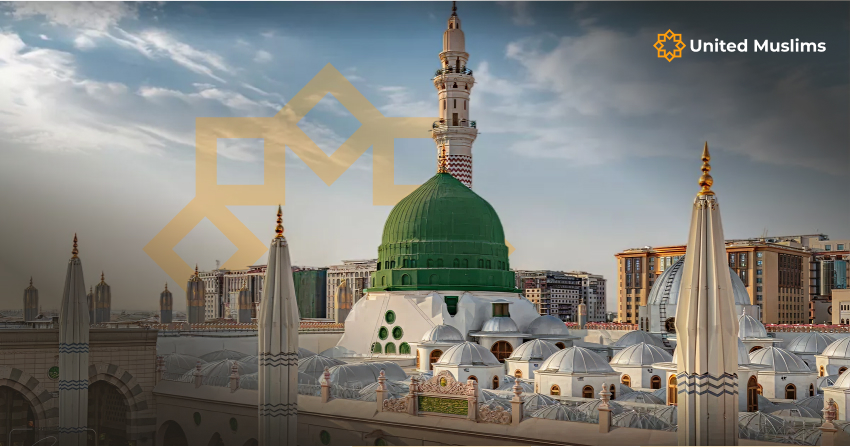
The Prophet Muhammad (PBUH) led a simple life. He was always willing to help others, even when he didn’t have much. His kindness moved others and made them want to help those who were having a hard time. After he died, his friends kept up the same attitude of giving and mercy, putting his lessons into reality and building a community based on those values.
The Prophet’s Example of Giving Charity
In Islam, charity is more than just donating money; it shows how much you care about others and your beliefs. The Prophet (PBUH) declared that any act of compassion is a form of charity. He stated,
“ Save yourself from Hellfire even by giving half a date in charity.” (Bukhari)
He gave freely to the poor, distributed his food, and told others to help those in need. Through his example, the companions learnt that giving charity was a way to strengthen faith and bring people together.
Today, Muslims all over the UK continue this tradition through donating for charity, giving Zakat, and supporting various charitable causes that ease hardship across the world.
Also Read: The Prophet’s (PBUH) Example of Generosity and Charity
Abu Bakr (RA): Giving Everything for Allah
Abu Bakr (RA) was known for his strong religion and a kind heart. When the Prophet (PBUH) asked his companions to give money to charity, Umar ibn Al-Khattab (RA) offered half of his wealth, thinking he had given the most. But Abu Bakr (RA) donated everything he had.
The Prophet (PBUH) asked,
“What have you left for your family?” He answered, “Allah and His Messenger.”
That act shows what it means to give in charity with complete trust in Allah. Each time we give to charity or offer Zakat, we follow that same mindset of faith and sacrifice that defined Abu Bakr’s life.
Umar ibn Al-Khattab (RA): Serving with Compassion
Umar (RA) ruled with justice and a caring heart. He would walk around at night to see if anyone needed aid. One night, he saw a mother boiling stones to keep her hungry children quiet. Seeing this, Umar (RA) rushed to gather food for them. He carried it himself and cooked for them with his own hands.
That simple act reflects the true essence of Islam: leadership through service and compassion. In our times, people donate foods, give charity, and take part in helping charity drives across the UK. They continue the same message that Umar (RA) lived by: to never turn away someone in need.
Donate your zakat
Fulfil your obligation today – give Zakat and be a source of hope for those in need!
Uthman ibn Affan (RA): The Well That Keeps Giving
People in Madinah had a hard time finding clean water during a drought. The only available well was privately owned, and the owner charged high prices. The Prophet (PBUH) said:
“ Whoever buys the well of Rumah and gives its water freely to the Muslims will be granted Paradise.”
Uthman (RA) purchased that well and gifted it to the people. It still provides water today, as a true example of Sadaqah Jariyah, a charity that keeps giving.
His story inspires many water charity projects across the world. Through global charity work, countless families continue to receive clean drinking water. It is only possible because of some people who choose to donate in charity.
Ali ibn Abi Talib (RA): Giving with Sincerity
Ali (RA) was known for giving quietly. He would give money at night when no one could see him. The Quran beautifully describes this act of giving from the heart:
“Those who spend their wealth in charity day and night, secretly and openly—their reward is with their Lord.” – Surah Al-Baqarah (2:274)
His humility reminds us that giving should be done purely for Allah’s pleasure. Today, when you donate to the charity or give Zakat through organisations, such as United Muslims, you continue that same legacy of heartfelt giving.
Abdur Rahman ibn Awf: Redefining Generous Wealth
Abdur Rahman ibn Awf was a phenomenally successful businessman. His wealth grew immensely. He never thought of his money as a trophy. He saw it as a community trust. He famously calculated and paid his Zakat in advance. His trading caravans were so large that their arrival was a public spectacle.
One of his stories stands out. He donated an entire caravan of 700 camels. They were loaded with food, goods, and money. The charity physically filled the mosque. This was a public lesson in responsibility. Abdur Rahman ibn Awf demonstrated that wealth brings a proportional duty.
His life encourages a mindset of transformative giving. His example is a powerful inspiration for a donor making a significant charity donation for Palestine.
Feeding Others: A Legacy That Lives On
The Prophet (PBUH) and his companions often gave food to those who had none. One of the easiest and most satisfying ways to help others is to feed them. The Quran reminds us:
“And they give food in spite of love for it to the needy, the orphan, and the captive, [Saying], ‘We feed you only for the countenance of Allah. We wish not from you reward or gratitude.’” – Surah Al-Insan (76:8-9)
This teaching remains alive today through various charity programmes that provide meals for struggling families and Palestine charity efforts that feed those facing hardship.
Keeping the Legacy Alive Today
The Prophet’s companions formed a community based on kindness. Their legacy lives on in every Muslim who gives charity, supports a cause, or helps ease another’s hardship.
When you donate to Palestine, give your Zakat, or take part in helping charity projects, you honour that same legacy. Each contribution reflects the same love and mercy that guided the Prophet’s (PBUH) companions.
At United Muslims, we work to keep that spirit alive by supporting emergency appeals, education programmes, and sustainable aid projects that make a real difference.
Bringing hope through small acts of kindness—a meal, a helping hand, or a gift can light up a child’s day.
The Blessings of Giving
Charity brings blessings in this world and the next. Allah says in the Quran:
“ The example of those who spend their wealth in the cause of Allah is that of a grain that sprouts into seven ears, each bearing one hundred grains.” – Surah Al-Baqarah (2:261)
Giving a pound to charity brings you more rewards. The Prophet (PBUH) also said:
“ Charity does not decrease wealth.” (Muslim)
When you give charity, you purify your wealth, strengthen your faith, and help those who rely on our collective care.
A Call to Keep the Legacy Alive
The companions didn’t give because they had plenty. They gave because they thought it was good to help others for Allah’s sake. Their stories remind us that no act of charity is too small.
Today, we have the same opportunity. You can help families in need by giving to charity, Zakat, or Palestine. You may also support water charity initiatives and school programmes that open doors for the next generation.
Each time you give, you carry forward the compassion that began with the Prophet (PBUH) and spread through his companions.
Final Thoughts
The Prophet’s companions didn’t see charity as a duty; they thought of it as a gift. Their kindness created a caring community that still inspires Muslims all across the world. By giving with sincerity, they showed that real wealth lies in kindness.
It’s our turn now. Through donating for charity, giving Zakat, and supporting causes such as Palestine charity, we can continue their work.
United Muslims invites you to be part of that ongoing legacy. Donate your Zakat, give charity, and help bring change to lives across the world. Your giving today can light someone’s tomorrow, and that’s a reward worth striving for.
