
Sadaqah is so much more than giving money. It is being nice, showing sympathy, and helping someone in any way we can. Here in the UK, where many strive to support others through charity, the timeless teachings of Prophet Muhammad (PBUH) still guide and inspire us.
The Prophet (PBUH) was the perfect example of what true giving looks like. His kindness was not limited to wealth. He gave his time, care, attention, and love without expecting anything in return. He always donated without thinking twice, even when he didn’t have much.
When we hear the word “Sadaqah,” a lot of us think of putting coins in a box or giving money online. But the beauty of Sadaqah goes far beyond that. Sadaqah includes every kind word, every small act of care, and every moment spent assisting someone else.
Let’s explore some of the most powerful and inspiring examples of how the Prophet (PBUH) practised Sadaqah in everyday life and how we can follow in his footsteps today.
The Prophet (peace be upon him) taught that Sadaqah acts as a shield that protects us from hardship and misfortune. He said,
Why is Sadaqah Important?
The Prophet (PBUH) said that Sadaqah is like a shield that keeps us safe from hardship and misfortune. He remarked,
“Charity does not decrease wealth” (Sahih Muslim)
It reminds us that giving does not reduce what we have; it brings barakah (blessings) into our lives. Giving with an open heart cleanses our wealth, softens our hearts, and brings us closer to Allah. Every act of Sadaqah, like helping someone in need, giving to a charity, or just smiling at someone, brings rewards in this world and the next.
Sadaqah in Everyday Life
A lot of people think that giving to charity involves giving a lot of money. However, the Prophet (PBUH) taught us that Sadaqah goes beyond wealth. He said, “Even a smile is charity” (Tirmidhi). Here are some easy ways you may help others:
- Providing food to those in need: You can donate food to local shelters or support global charity initiatives.
- Helping others: Offering a hand with a task or sharing kind words is also a form of Sadaqah.
- Donating your Zakat: Zakat is a duty for Muslims that ensures that money goes to the people who need it most.
- Supporting water charity projects: Access to clean water can transform lives in places like Palestine, Syria, and Afghanistan.
- Giving your time and skills: Volunteering for a charity project in the UK can have just as much impact as a financial donation.
Donate your zakat
Fulfil your obligation today – give Zakat and be a source of hope for those in need!
The Prophet’s (PBUH) Best Examples of Sadaqah
Prophet Muhammad (PBUH) did several things that were selfless and kind during his life. He didn’t just give money to charity; he also gave people around him his time, energy, and love. Here are some strong examples of his charity:
Feeding the Hungry
The Prophet (PBUH) ensured no one went without food. He taught that giving food to others is one of the best ways to help. He said,
“The best of you are those who feed others” (Sunan Ibn Majah)
This hadith emphasises the importance of generosity and caring for others, particularly through providing food to the vulnerable individuals. Whether offering food to the poor or sharing a meal with guests, he led by example and encouraged Muslims to share food with their neighbours and those in need.
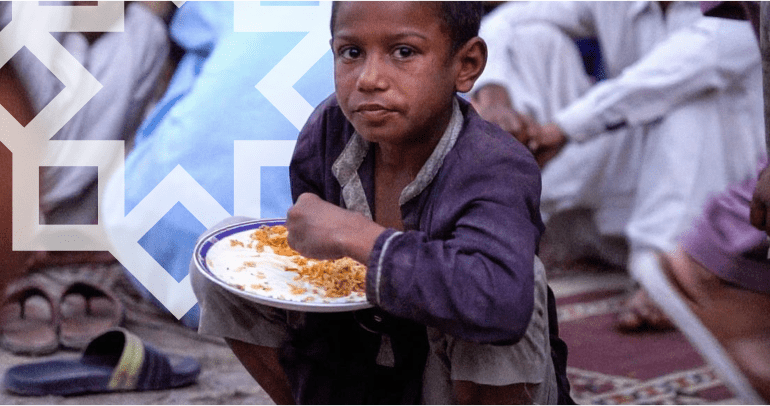
Bringing hope through small acts of kindness—a meal, a helping hand, or a gift can light up a child’s day.
Caring for the Most Vulnerable
The Prophet (PBUH) cared a lot about the most vulnerable people, like orphans, widows, the poor, and even prisoners. He made it clear that caring for others is a central part of faith. He said,
“I and the one who looks after an orphan will be like this in Paradise” (Sahih Bukhari),
holding his index and middle fingers together to show the closeness. Compassion and charity were at the very heart of Islam.
Helping the Poor
The Prophet (PBUH) never turned away anyone in need. He encouraged charity without expecting anything in return and taught that the best charity is given in secret, where only Allah knows. He said,
“A man who gives in charity and hides it, so that his left hand does not know what his right hand has given, will be under the shade of Allah on the Day of Judgement”. (Sahih al-Bukhari)
This hadith indicates the importance of giving to charity without drawing attention. It reminds us that acts of genuine kindness will be rewarded by Allah on the Day of Judgement.
Providing Water to the Thirsty
The Prophet (PBUH) thought that giving people clean water was one of the best things you could do for others. A famous hadith tells of a man forgiven by Allah simply for giving water to a thirsty dog (Bukhari, Muslim). This highlights the immense rewards of water charity, such as building wells and offering clean water to communities in need.
Forgiving Debts
The Prophet (PBUH) asked Muslims to be kind to people who are facing difficulties with money. He praised those who forgave debts or extended repayment times, saying Allah would show mercy to them on the Day of Judgement. This teaches that charity is not just about giving money; it is about easing the burdens of others.
Offering Kind Words and a Helping Hand
Charity isn’t just about giving money; there are many small but important ways to show it. The Prophet (PBUH) said,
“Every act of goodness is charity” (Sahih Muslim)
He demonstrated that charity is not just about wealth but kindness and service to others, including a warm smile, comforting words, or helping someone carry their belongings.
Selflessness in Giving
The Prophet (PBUH) often gave away everything he had, even the food in his home, so others could have something to eat or wear. He never turned away a person in need. If he had nothing, he would find someone who could help. If he had only a little, he would share it. One companion said,
“The Messenger of Allah was never asked for anything except that he gave it” (Bukhari)
His selflessness was a great example of generosity because he was always willing to help others.
Humility in Charity
The Prophet (PBUH) gave with kindness and respect. He never made anyone feel bad for asking. He taught that charity should never be given with arrogance. He once said,
“A kind word is charity” (Bukhari).
This shows us that how we give is just as important as what we give. He made people feel honoured, not pitied.
Sadaqah Jariyah
The Prophet (PBUH) said that the best kind of charity is the one that keeps helping people even after we die. He said,
“When a man dies, all his good deeds come to an end except three: Ongoing charity (Sadaqah Jariyah), beneficial knowledge and a righteous son who prays for him.” (Sahih Muslim)
This is what Sadaqah Jariyah means. It is a charity that will keep helping people even after we are gone. And the Prophet (PBUH) did not just teach it; he lived it. He planted trees, helped provide water through wells, and promoted education with the belief that these small acts could change lives for years to come.
That same spirit lives on today. A well built in a village can give clean water to families for generations. Even planting a tree can become a source of shade, food, and reward that continues long after we are gone.
Sadaqah Jariyah is not just about addressing needs in the moment; it is about building a future filled with ongoing benefit, kindness, and reward.
Also Read: How Sadaqah Jariyah Can Benefit You Long After You’re Gone
Support Palestine with Your Sadaqah
Today, the need for charity is greater than ever, especially in places like Palestine. Supporting a Palestine charity means providing food, water, and medical aid to those suffering. Your donation to Palestine could mean food for a family that is starving or a place to stay for a child who doesn’t have one.
United Muslims is here to make sure that your donations go straight to the people who need them the most. Your generosity can bring hope and relief to many people, whether you give Zakat in the UK or support efforts around the world.
Give in Charity, Reap the Rewards
The Prophet Muhammad (PBUH) taught us that giving to others isn’t just about money; it’s also about having good intentions, being kind, and doing something. Giving not only helps others, but it also cleanses our own hearts. Every little thing you do to help, like giving money to a charity or doing something nice for someone, matters.
Frequently Asked Questions
What is the difference between Sadaqah and Zakat?
Zakat is an obligatory form of charity for eligible Muslims, while Sadaqah is voluntary and can be given at any time in any amount. Both bring reward, but Sadaqah allows continuous kindness through small daily actions.
Is Sadaqah only about giving money?
No. Islam teaches that Sadaqah includes every good deed, such as a smile, kind words, helping someone, feeding others, or offering support. Even small acts of care count as charity.
What is Sadaqah Jariyah?
Sadaqah Jariyah is an ongoing charity that continues to benefit people long after the giver has passed away. Some of the examples include building a well, planting a tree, supporting education, or funding long-term projects.
How can I follow the Prophet’s (PBUH) teachings on giving today?
You can practise kindness daily by donating food, supporting clean water projects, helping the poor, volunteering your time, spreading benefits, and giving without expecting anything in return. Simple actions done with sincerity hold great value.
Is giving to Palestine considered Sadaqah or Zakat?
It can be either. Donations can be given as Sadaqah or, if the recipients qualify, as Zakat. Many people choose to donate to Palestine through trusted charities that ensure aid reaches eligible families directly.
