
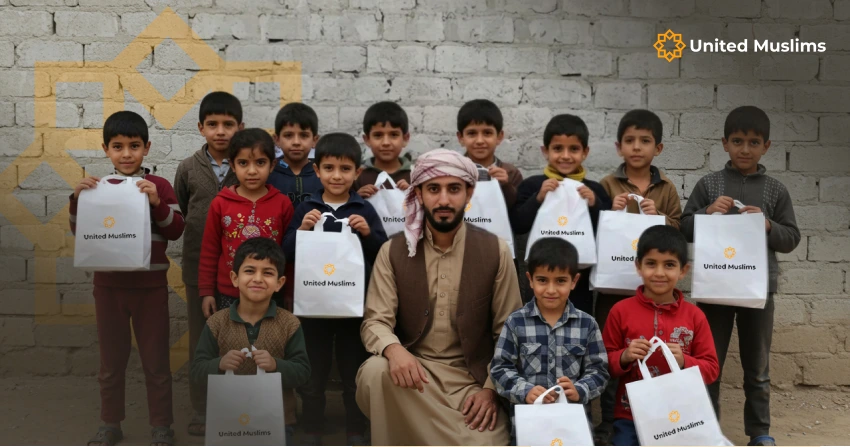
Acts of kindness are very powerful. No matter how small, they can lift someone’s heart and remind us of our shared humanity. Across the UK, Muslims continue to show that giving is a core part of faith. It can be helping a neighbour, donating to a local food drive, or giving money to families in need through Palestine charity appeals.
In Islam, giving to others isn’t just about money. It’s about being kind, caring, and realising that Allah gave us everything we have. Each time we give, we do more than help others; we bring peace to our own hearts.
At United Muslims, our goal is to help people give with purpose. From Zakat donations to water charity projects, every contribution you make supports real lives around the world.
The Significance of Giving in Islam
Giving charity is one of the most beautiful teachings of Islam. It is not only a kind thing to do; it is also a kind of worship. Allah mentions charity many times in the Quran, showing us its importance in building a just and caring community.
“The example of those who spend their wealth in the cause of Allah is that of a grain that sprouts into seven ears, each bearing one hundred grains. And Allah multiplies ˹the reward even more˺ to whoever He wills.” – Surah Al-Baqarah (2:261)
When you give, your charity becomes that seed; one small act that multiplies in blessings.
The Prophet Muhammad (peace be upon him) lived a simple life. Even when he had very little, he still gave to others. His kindness touched his companions, who continued his legacy of selflessness and care.
Giving in Islam is also an expression of gratitude. When we share our wealth, we show that we don’t really own our wealth.
Also Read: The Importance of Charity in Islam
Why Charity Benefits Both the Giver and Receiver
Charity has two sides: it helps the one who receives and uplifts the one who gives.
The Prophet (peace be upon him) said,
“The believer’s shade on the Day of Resurrection will be his charity.” (Tirmidhi)
For people who need it, charity can mean food, clean water, or a place to live. It brings peace, satisfaction, and closeness to Allah for the giver.
When you donate to a cause, such as the Palestine appeal, a clean water project, or an education fund, you do more than give money. You give hope. You restore dignity. And you remind someone that they are not forgotten.
Charity is good for your emotions, even on a personal level. It reduces stress, strengthens empathy, and brings inner calm. Giving teaches us that happiness doesn’t come from what we keep, but from what we share.
Donate your zakat
Fulfil your obligation today – give Zakat and be a source of hope for those in need!
Quranic and Prophetic Teachings on Charity
There are lots of instances in the Quran and Sunnah about the effect of giving.
“O believers! Donate from the best of what you have earned and of what We have produced for you from the earth.” – Surah Al-Baqarah (2:267)
This verse tells us to donate things that are good and pure, not just leftovers or unwanted items. True giving is done with honesty and care.
“Those who spend their wealth in charity day and night, secretly and openly—their reward is with their Lord, and there will be no fear for them, nor will they grieve.” – Surah Al-Baqarah (2:274)
Giving all the time, whether in private or in public, helps people feel peaceful and have faith. The Prophet (peace be upon him) also said:
“Charity does not decrease wealth.” (Muslim)
When you give for the sake of Allah, your wealth is never reduced. Instead, it is blessed in ways you may not see, through ease, protection, or emotional peace.
Spiritual and Emotional Rewards
Giving makes your heart purer. It removes selfishness, increases gratitude, and brings you closer to Allah.
“Take, [O, Muhammad], from their wealth a charity by which you purify them and cause them increase.” – Surah At-Tawbah (9:103)
Giving to others cleans the heart. It reminds us that we shouldn’t keep our money but spend it for good.
When you donate to charity, your heart becomes lighter. You start to notice your blessings more and worry less about what you lack. You connect with a higher purpose and give your life meaning by helping others. The Prophet (peace be upon him) said:
“The upper hand is better than the lower hand.” (Bukhari & Muslim)
This simple remark has a lot of wisdom in it. It teaches us that it’s better to give than to get. Giving empowers you, strengthens your spirit, and teaches you to trust Allah’s promise of reward.

Worldly and Eternal Benefits
Charity is one of those unique acts that brings blessings both now and in the Hereafter.
Blessings in Wealth
Allah promises that giving does not reduce wealth; it increases it in unseen ways.
“Whatever you spend in the cause of Allah will be paid to you in full.” – Surah Al-Anfal (8:60)
When you support a charitable project in the UK or give Zakat, you are not losing but investing in barakah.
Protection from Hardship
Charity can help keep you safe from problems, sickness, and bad luck. It becomes a shield between you and hardship. The Prophet (peace be upon him) said:
“Give charity without delay, for it stands in the way of calamity.” (Tirmidhi)
Reward in the Hereafter
A single donation to a Palestine appeal, water project, or education charity can become the reason Allah grants you mercy on the Day of Judgement.
“Whoever relieves a believer’s distress, Allah will relieve his distress on the Day of Resurrection.” (Muslim)
Different Forms of Charity in Islam
Islam offers many ways to give, so everyone can take part regardless of their wealth or means.
Zakat
This is the third pillar of Islam and an obligation for every eligible Muslim. It purifies wealth and supports those who need it most. Through the United Muslims’ Zakat calculator, you can easily find out how much you owe and make your Zakat donation securely.
Sadaqah
Sadaqah is a voluntary charity that can be given at any time. It could be money, a meal, or even a smile. Every act of kindness matters.
Bringing hope through small acts of kindness—a meal, a helping hand, or a gift can light up a child’s day.
Sadaqah Jariyah
Sadaqah Jariyah is a type of generosity that keeps helping people even after you die. It could mean paying for a well, building a school, or taking care of an orphan.
Lillah
Lillah is a voluntary donation given for the sake of Allah. It is often used to support mosques, community centres, or education.
Waqf
Waqf is a long-term gift of property or money that is set aside for charitable use. It continues to serve communities for generations.
Each of these forms of giving offers a unique path to reward and spiritual growth.
United Muslims: Helping You Give for a Reason
At United Muslims, we think that giving should be easy, clear, and important. Our 100% donation policy ensures that every penny you donate goes directly to helping others, not on admin or marketing costs.
You can:
- Give your Zakat donation safely through our trusted Zakat platform.
- Provide emergency relief and medical aid by supporting Palestine charity appeals.
- Help us get clean water to families by joining our clean water projects.
- Bring food packages to people who are hungry.
- Pay for education and child sponsorship programmes that help people get out of poverty.
Each contribution helps make the future better.
The Gift of Giving in Islam
Faith is based on charity. When you give, you help yourself as well as someone else.
“The most beloved of deeds to Allah are those that are most consistent, even if small.” (Bukhari)
Giving is an act of love, a reflection of gratitude, and a means of drawing nearer to Allah. Your kindness makes a difference that lasts, whether you give a few pounds to a UK charity food drive, a Zakat donation, or water through a global charity.
At United Muslims, we invite you to keep the spirit of giving alive. Continue to share, care, and inspire. Every positive thing you do sends forth waves of goodness that never go away.
