Already Know Your Zakat?
Calculate & Pay Zakat
Our Zakat Calculator helps you calculate how much Zakat you need to pay based on your wealth, savings, gold, silver, investments, and liabilities. This calculator gives you a clear and reliable Zakat amount according to Islamic principles, regardless of where your assets are held.
Zakat is an obligation upon eligible Muslims and is calculated at 2.5% of qualifying wealth above the Nisab threshold. This tool is designed to make the process simple, transparent, and accessible for Muslims worldwide.
Nisab to Use

Nisab Threshold

Gold Nisab:
(87.48) grams
£4,509.65

Silver Nisab:
(612.36) grams
£350.21
Your Calculated Zakat
Summary
Total Assets: £0.00
Total Liabilities: £0.00
Zakat Payable (2.5%): £0.00
Zakat to Pay:
£0.00

What is Zakat?

Zakat is the third pillar of Islam. It is a yearly obligation for every adult Muslim who is financially able and whose wealth stays above the Nisab level for a full Islamic year. By giving Zakat, Muslims seek Allah’s (SWT) reward and help those in need.
Who is eligible for Zakat?
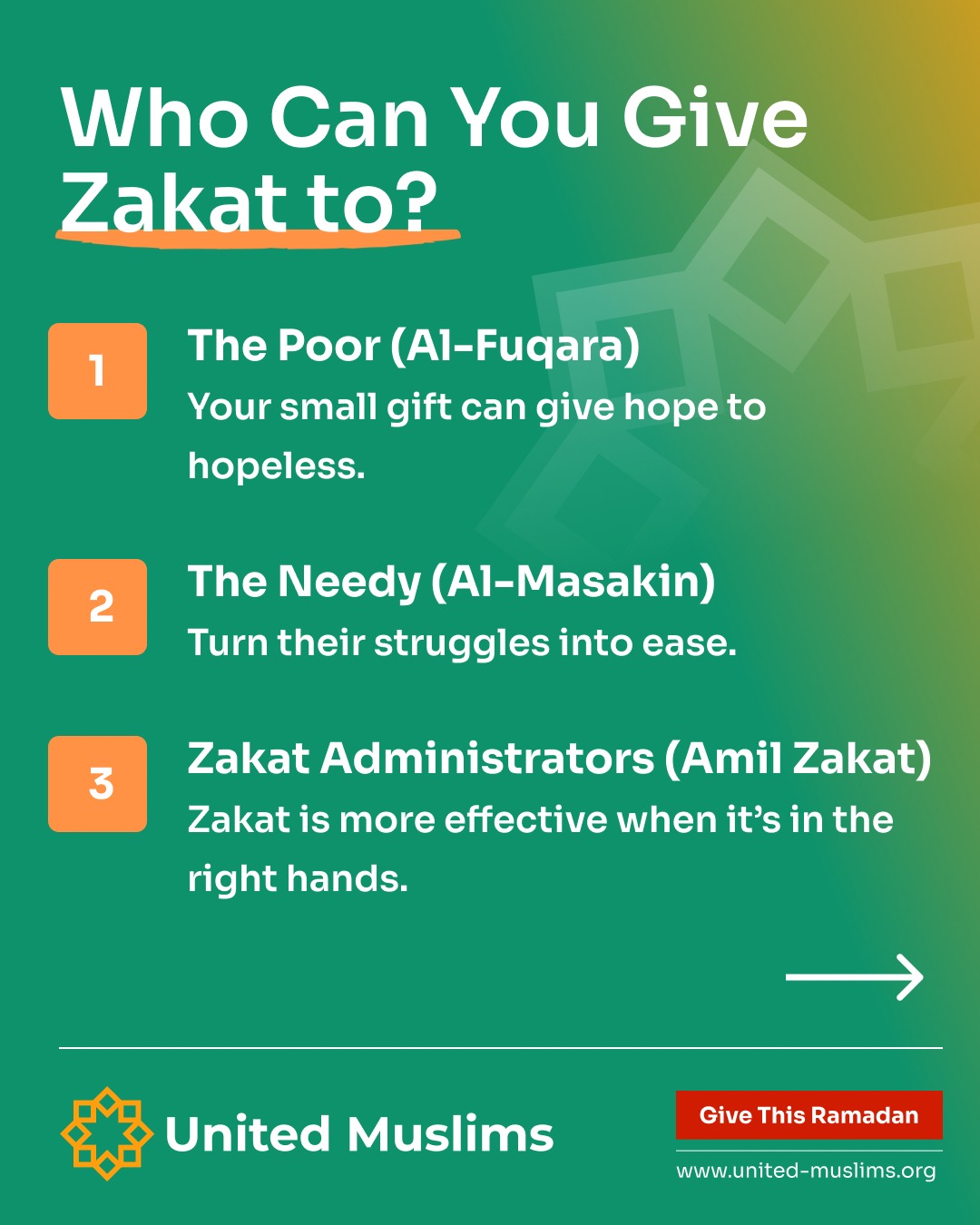
Unlike Sadaqah or Lillah, Zakat donations have specific eligibility criteria. Recipients of Zakat fall into one of the following eight categories:
- The impoverished
- The destitute
- Zakat administrators
- Those seeking to reconcile hearts
- Individuals in bondage or captivity
- Those burdened with debt
- Causes in the path of Allah
- Travellers in need
At United Muslims, we have a range of Zakat-applicable projects that adhere to Islamic principles for the distribution of funds.
What is Nisab?
Nisab is the minimum amount of wealth a Muslim must possess for an entire lunar year to be obliged to pay Zakat. This threshold is based on the value of gold or silver:
- Gold: The value equivalent to 87.48 grams of gold.
- Silver: The value equivalent to 612.36 grams of silver.
Since gold and silver prices fluctuate, the nisab threshold varies accordingly. We have built a simple-to-use Zakat calculator that not only determines the eligibility but also calculates the amount due. If your wealth falls below the nisab threshold at any point during the Islamic year but remains above it at both the beginning and end of the year, it’s advisable to consult your local imam for guidance.
When should I pay Zakat?
You must pay Zakat when your wealth stays above the Nisab level for one full Islamic year, starting from the time it first crossed that limit. The amount is calculated on the day you give it, based on your current wealth, even if it went up or down during the year.
Many Muslims choose to pay Zakat during Ramadan because it is a blessed month with greater rewards. But you can pay at any time of the year, as long as your wealth has been above the Nisab for a full lunar year. Remember, this is different from Zakat al-Fitr (Fitrana), which must be paid before the Eid prayer. At United Muslims, we run Zakat-applicable projects all year round to support the poorest and most vulnerable people worldwide.
What assets should be considered for Zakat calculation?
Your Zakat obligation is based on your accumulated wealth, which includes personal assets and liquid funds. Zakat is due on assets that are not essential for your daily living. For example, your primary residence is exempt, but a secondary property that you don’t live in should be counted in your Zakat calculation. Similarly, while your primary vehicle is considered a necessity and exempt, a second car, deemed a luxury, should be included.
Assets to consider for Zakat calculation include:
- Cash, whether kept at home, in banks, or in savings accounts.
- Savings set aside for specific purposes (like Hajj, property deposits, weddings, etc.).
- The current value of any gold and silver you own.
- Stocks and shares in your possession.
- Revenue from rental properties (like a second home).
- The value of debts owed to you that you expect to be repaid (e.g., money lent to friends or relatives).
When calculating Zakat, do not take into account:
- Payments scheduled for the month in which you are paying Zakat.
- Debts you owe, such as mortgage/rent payments, credit card debts, and personal loans.
- Possessions like household appliances and clothing.
- Business-related expenses, including bills, salaries, rents, and rates.
- Business loans and overdrafts.
Is it permissible to settle Zakat in instalments?
You have the option to fulfil your Zakat obligation through instalment payments, although it is preferable to make a single lump-sum contribution. If you are confident that your wealth will remain consistent, you can choose to pay in advance of the due date.
How is Zakat al Fitr (Fitrana) different from Zakat?
Zakat al Fitr, also known as Fitrana, is a mandatory religious contribution exclusively observed during the month of Ramadan, and before the commencement of Eid al-Fitr. Traditionally, Fitrana is paid out in the form of food; however, it is also permissible to pay in cash through charities like United Muslims. Zakat is entirely different, and a mandatory contribution separate from Fitrana.
How can I calculate my Zakat online?
We have an easy-to-use Zakat calculator on our website to quickly determine your eligibility and the amount due. Simply fill in the required information and click on calculate.
How do I donate my Zakat?
After calculating your Zakat or knowing your owed amount, you have the option to make your donation through United Muslims. We have a range of Zakat-eligible projects that you can pick from, or just donate towards our ‘Where Most Needed’ fund to help those who need it most.
Is Zakat 2.5% on all savings?
Zakat is 2.5% of eligible wealth that exceeds the Nisab and has been held for one lunar year.
Do I pay Zakat on my salary?
Zakat is not due on salary itself, but on savings accumulated from it after one lunar year.
Is this Zakat calculator accurate?
The calculator follows standard Islamic guidelines. For complex situations, consult a qualified scholar.
 Previous
 Previous


Instagram Feeds:























Instagram Videos: