
Khadijah (رضي الله عنها) was the first wife of Prophet Muhammad (ﷺ). Her story is the opening page of Islamic history. She believed in the Prophet (ﷺ) first and gave her wealth to support Islam before anyone else.
Her example also matters deeply today. Every Muslim feels lonely in faith sometimes, just like Prophet Muhammad (ﷺ) felt after the first revelation. The story of Khadijah (رضي الله عنها) shows us that the greatest strength of a believer is the unwavering support from their loved ones.
Let’s step into the world of the woman the Prophet (ﷺ) loved so deeply.
 Select an element to maximize. Press ESC to cancel.
Prophet Muhammad (ﷺ) had no context at the time of the first revelation. It was an overwhelming experience for him, and he returned home to Khadijah (رضي الله عنها) in severe shock.
When he explained to her what had just happened, she did not ask for proof or express doubt. She also did not retreat in fear. She looked at the man she knew and called him Al-Amin, the Truthful. She knew his character was impeccable.
She said these famous words:
She listed his virtues, mentioned his honesty, and recalled how he bore others’ burdens. She then wrapped him in a cloak to comfort him.
She went to her cousin, Waraqah ibn Nawfal, who confirmed the truth of the revelation. He identified the Angel as Namus, the same being who came to Musa (عليهم السلام). Khadijah did not need to see the Angel because she had seen the truth’s effect on her husband. That was enough for her to embrace Islam. She was the first person to embrace Islam.
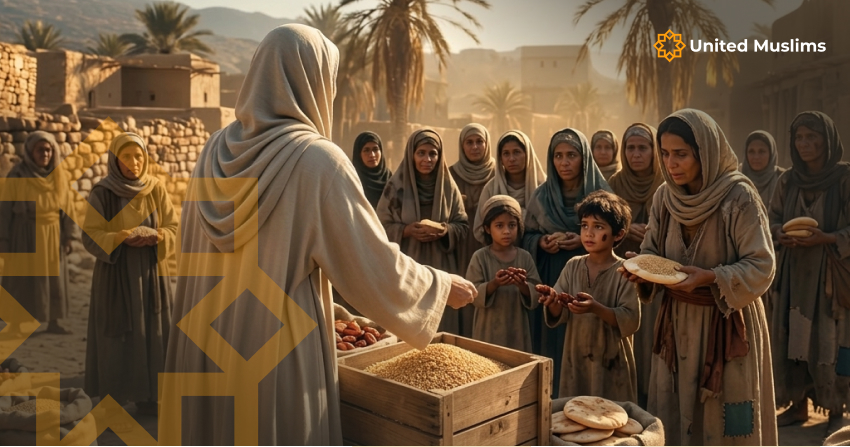
Khadijah (رضي الله عنها) was among Mecca’s most successful merchants. She had employed Muhammad (ﷺ) for his honesty, but she later proposed marriage to him for his pious character. After embracing Islam, her wealth became Islamic history’s first treasury.
Consider the early Meccan years. The early converts faced harsh realities. They were often young, many were poor, and some were enslaved. They suffered immediate economic hardship as their families boycotted them. They also lost their livelihoods as their opponents tried to use poverty to break their faith.
Khadijah (رضي الله عنها) stepped in to help these people through sadaqah and charity. Her wealth served as the lifeblood of early dawah and provided complete material support for the Prophet (ﷺ). This support freed him from worldly concern, allowing him to devote himself entirely to his mission.
The early years of prophethood were relentless for Muhammad (ﷺ). The Quraysh waged psychological warfare daily. They called the Prophet (ﷺ) a liar and labelled him a poet. They accused him of sorcery, calling him mad. They mocked him in the streets and pelted him with dirt. His own people rejected him.
Amid all this distress, he needed a place where truth was not debated. He needed a space where his sanity was not questioned. He needed a sanctuary to forget about the outside world. Khadijah (رضي الله عنها) was that sanctuary with her unwavering support to relieve his anxiety.
After the first revelation, a pause occurred before the next revelation. This pause is known as Fatrat al-Wahy. The Prophet (ﷺ) grew deeply distressed during this phase, fearing that Allah had forsaken him. Divine silence brought aching uncertainty, but Khadijah (رضي الله عنها) provided reassurance again. She guided him with gentle insight and referred to the prophets before him.
This firm support earned her a unique status as the Prophet (ﷺ) himself named her among the four greatest women with Maryam, Asiyah, and Fatimah (رضي الله عنها). Khadijah (رضي الله عنها) held a special place in his heart, as evident from the following hadith:
Persecution in Mecca had reached its peak, with Quraysh imposing a social and economic boycott on Banu Hashim and Banu Muttalib. These are the clans to which Prophet Muhammad (ﷺ) belonged.
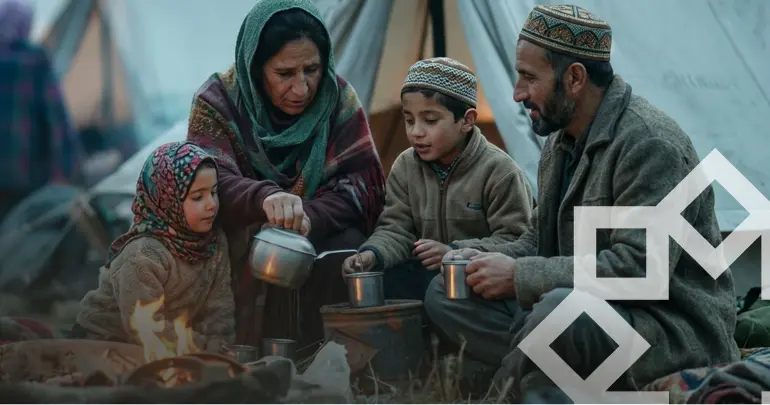
The boycott cut them off from all trade. It severed social ties and blocked access to food supplies. It was a slow attempt at starvation, forcing these clans to retreat into a mountain valley, where they suffered for three agonising years.
Historical accounts describe that the cries of hungry children echoed through the valley. People ate leaves and boiled animal hides to survive.
Khadijah (رضي الله عنها) was in her mid-sixties at that time. This was an age for rest and respect. Her wealth was already largely spent in sadaqah and charity, but she endured the same hunger in the valley as her family. She could have remained in Mecca in comfort, but her loyalty refused that path. Her loyalty was to her faith and to her Prophet. It was not for comfort or safety.
Her presence gave moral support to the people suffering in the valley. They saw the “Princess of Quraysh” among them, and this sight fortified their spirits. She spent her remaining wealth there.
The boycott’s hardship caused a rapid decline in her health. Some scholars directly link this period to her death.
The Prophet (ﷺ) named her death year the ‘Year of Sorrow.’ This was the same year he also lost his beloved uncle Abu Talib. He mourned her deeply and gave her the title ‘At-Tahirah’ (The Pure One).
Her faith never stayed just in her heart. It guided her every action. She was an active partner, providing intellectual and spiritual support for a righteous cause.
Khadijah (رضي الله عنها) passed away before the Hijrah. She never witnessed the conquest of Mecca, but she sacrificed everything she had for the Prophet (ﷺ). Her life teaches us to give for a sacred cause, not only for visible or worldly results.
Khadijah (رضي الله عنها) desired no public recognition. She gave in times of ease and in times of extreme hardship, only for the sake of Allah.
Follow her spirit and give your donations to United Muslims. Your charity can support educational initiatives or fund humanitarian causes. By doing so, you also join the legacy of Khadijah (رضي الله عنها). You follow the example of Islam’s first donor and help write the next chapter for the hopeless.
