
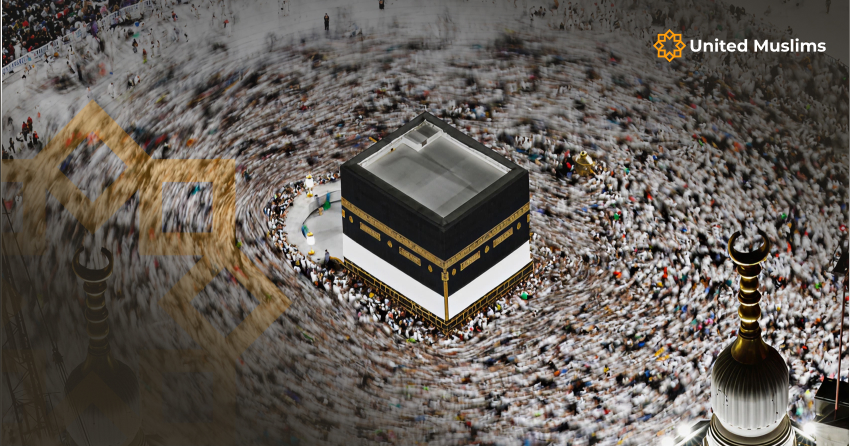
The Hajj pilgrimage is one of the greatest acts of worship in Islam, combining physical effort, financial sacrifice, and deep spiritual devotion. For many Muslims, it is a once-in-a-lifetime journey that demands both preparation and understanding. This Hajj guide outlines the key rulings, types, and Hajj step by step rituals, written especially for pilgrims travelling from the UK in 2026.
What Is Hajj?
Hajj, the fifth pillar of Islam, is the sacred pilgrimage to Makkah al-Mukarramah that every able Muslim must perform at least once in their lifetime. It takes place during Dhul Hijjah, the twelfth month of the Islamic lunar calendar, with the main rites performed from the 8th to the 13th of Dhul Hijjah. The 9th, the Day of Arafat, is the most significant day of the entire pilgrimage.
Hajj 2026 is expected to begin around 26 May (8 Dhul Hijjah 1447 AH), with the Day of Arafat falling on 27 May, subject to the official moon sighting.
Who Must Perform Hajj?
Hajj becomes fard (obligatory) only when certain conditions are fulfilled. The Quran clearly states that Hajj is obligatory only for those who are able.
وَلِلَّهِ عَلَى النَّاسِ حِجُّ الْبَيْتِ مَنِ اسْتَطَاعَ إِلَيْهِ سَبِيلًا”
“And [as a duty imposed by] Allah upon the people is a pilgrimage (Hajj) to the House, for whoever is able to find thereto a way.” (Surah Āl ʿImrān 3:97)
To perform Hajj:
- A person must be Muslim, sane, and an adult; Hajj is not required for someone who is permanently mentally unfit
- A person must have financial capability, meaning enough money to cover Hajj 2026 costs while also supporting dependents without hardship. For UK pilgrims, Hajj costs typically range between £7,000 and £12,000, depending on package type
- If someone is permanently unable to perform Hajj due to old age, illness, or disability, they may appoint another person to perform Hajj al-Badal (Proxy Hajj) on their behalf. The same applies for a deceased person who never had the chance to fulfil this obligation
- There must be safety and security for the journey; if travel is dangerous or life-threatening, Hajj is not obligatory
Regarding women, many classical scholars require a mahram for travel, while some contemporary scholars permit Hajj in safe, organised groups, as is common practice for UK pilgrims today.
Also Read: How Hajj Strengthens the Muslim Ummah
Donate your zakat
Fulfil your obligation today – give Zakat and be a source of hope for those in need!
Types Of Hajj
There are three types of Hajj, which differ in how they are combined with Umrah and whether animal sacrifice is required.
- Tamattu: The pilgrim performs Umrah first, exits Ihram, and then re-enters Ihram for Hajj. Umrah and Hajj are performed separately, and a sacrifice (Hady) is required
- Qiran: Umrah and Hajj are combined within a single continuous Ihram, with no exit in between. A sacrifice is required
- Ifrad: Hajj is performed on its own, without Umrah. No sacrifice is required. This option is best suited for those living in or near Makkah
For UK Muslims and other international pilgrims, Tamattu’ is the most commonly chosen route. It allows time to complete Umrah, rest, and recover before the main Hajj rites begin.
Hajj Rituals In Order: A Step-by-Step Guide
The sequence of Hajj rituals is based on the Farewell Pilgrimage of Prophet Muhammad (PBUH), performed in the 10th year of Hijrah. The rites are made up of fard (obligatory pillars) and wajib (compulsory) acts: missing a fard invalidates Hajj, while missing a wajib requires a compensatory sacrifice (Damm). Where sacrifice is not possible, fasting is prescribed as an alternative.
The table below presents a step-by-step Hajj list of every ritual, its ruling, and what happens if it is missed.
Stage / Ritual | Type | If Missed |
Ihram (Niyyah + Talbiyah at Miqat) | Fard | Hajj invalid |
Standing at Arafat (Wuquf Arafah) | Fard | Hajj invalid |
Tawaf al-Ifadah | Fard | Hajj invalid |
Sa’i (Safa & Marwah) | Wajib | Sacrifice required |
Muzdalifah overnight stay | Wajib | Sacrifice required |
Rami (stoning the Jamarat) | Wajib | Sacrifice required |
Hady (sacrifice) for Tamattu/Qiran | Wajib | Sacrifice required |
Tawaf al-Wada (farewell Tawaf) | Wajib (except the residents of Makkah ) | Hajj remains valid |
Miqat and Entering Ihram
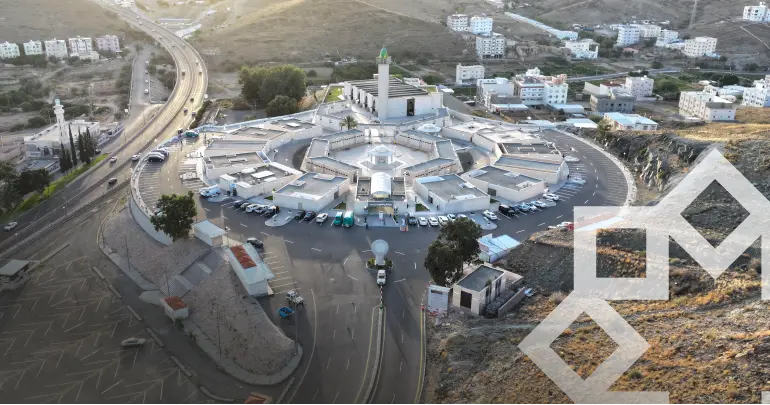
The Miqat (plural: Mawaqit) are designated boundary points set by the Prophet (PBUH) that must not be crossed without entering Ihram for Hajj or Umrah. For UK pilgrims travelling by air, the Miqat is usually Yalamlam or Al-Juhfah (near Rabigh).
It is recommended to prepare Ihram before the flight, as the Miqat is often announced on board. If someone passes it without Ihram, they should return if possible; otherwise, they enter Ihram where they are and offer a damm.
For those travelling to Madinah first and staying there before proceeding to Makkah, Ihram should be entered at Dhul Hulayfah (Abyar Ali) before departing for Makkah.
Ihram begins with the intention (Niyyah) in the heart, followed by the Talbiyah:
لَبَّيْكَ اللَّهُمَّ لَبَّيْكَ، لَبَّيْكَ لَا شَرِيكَ لَكَ لَبَّيْكَ، إِنَّ الْحَمْدَ وَالنِّعْمَةَ لَكَ وَالْمُلْكَ، لَا شَرِيكَ لَكَ
Labbayk Allahumma labbayk. Labbayka laa shareeka laka labbayk. Innal hamda wan-ni’mata laka wal-mulk. Laa shareeka lak.
“Here I am, O Allah, here I am. Here I am, you have no partner, here I am. Verily, all praise, grace, and sovereignty belong to You. You have no partner.”
It expresses devotion to Allah and is repeated throughout the journey. Men recite it aloud, women recite quietly.
Prohibitions Of The Ihram State
Once in Ihram, pilgrims must avoid cutting hair or nails, wearing perfume, hunting, and marital intimacy. Men additionally avoid stitched clothing and head coverings, while women avoid the niqab and gloves.
Arrival In Makkah And Tawaf Al-Qudum
Upon arriving in Makkah, pilgrims performing Hajj Ifrad and Hajj Qiran perform Tawaf al-Qudum, a Sunnah arrival circumambulation of the Kaaba consisting of seven circuits. Pilgrims performing Hajj Tamattu’ do not perform Tawaf al-Qudum, since they enter Makkah in Ihram for Umrah first, not Hajj, and complete their Umrah rites (Tawaf and Sa’i) upon arrival.
Journey To Mina
On the 8th of Dhul Hijjah, pilgrims travel from Makkah to Mina, around 8 km away. Each pilgrim is assigned to a tent area or building (identified by a maktab number) based on their Hajj operator, this number should be kept safe, as it is essential for locating the camp.
The day and night are spent in Mina, where all five daily prayers, Fajr, Dhuhr, Asr, Maghrib, and Isha, are performed in accordance with the Sunnah of the Prophet (PBUH).
Wuquf At Arafah: The Day Of Hajj
Wuquf at Arafah is the essence of Hajj. Prophet Muhammad (PBUH) said:
الْحَجُّ عَرَفَةُ مَنْ جَاءَ لَيْلَةَ جَمْعٍ قَبْلَ طُلُوعِ الْفَجْرِ فَقَدْ أَدْرَكَ الْحَجَّ
“Hajj is Arafah. Whoever reaches there and then comes to Jam (Muzdalifah) before Fajr has attained Hajj.” (Jami` at-Tirmidhi 889)
The standing (Wuquf) at Arafah on the 9th of Dhul Hijjah is the central fard of Hajj. If it is missed, Hajj is invalid and must be repeated. The valid window begins after Zawal on the 9th and continues until Fajr on the 10th. Even a brief presence within this window fulfils the obligation, though the Sunnah is to remain from afternoon until sunset before departing for Muzdalifah.
Temperatures in Arafah can exceed 40°C, so pilgrims should carry water, an umbrella, and a cooling towel.
Stay At Muzdalifah
Upon arrival at Muzdalifah, a plain between Arafat and Mina, pilgrims combine Maghrib and Isha at Isha time (Jam’ Ta’khir) and spend the night resting under the open sky. There are no hotels or tents here; pilgrims sleep outdoors, often bringing lightweight mats or sleeping bags.
This is also where pebbles for the Rami (stoning) are usually collected, although they can be gathered in Mina if preferred. Quantities should be roughly the size of a chickpea, and pilgrims need:
- Day 10: 7 pebbles (for Jamarat al-Aqabah only)
- Days 11–13: 21 pebbles per day (7 for each of the three Jamarat)
It is wise to collect a few extra, as pebbles can easily be dropped or lost in the crowds during Rami.
Rami Al-Jamarat: Stoning The Pillars
Rami al-Jamarat is the stoning of the pillars in Mina, symbolising Prophet Ibrahim’s (AS) rejection of Shaytan when he was commanded to sacrifice his son.
- Day 10 (Eid al-Adha): Only Jamarat al-Aqabah is stoned with 7 pebbles, each thrown while saying “Allahu Akbar.”
- Days 11-13: All three pillars are stoned in order: Sughra → Wusta → Kubra, with 7 pebbles each.
It is Sunnah to pause for du’a after Sughra and Wusta, facing the Qiblah. On Days 11 and 12, stoning is performed after Zawal until sunset.
Hady: The Sacrifice Obligation
Hady is the obligatory animal sacrifice required of pilgrims performing Hajj Tamattu’ or Qiran. Its rulings closely mirror those of Qurbani, and in many cases, the Hady performed during Hajj fulfils that obligation.
Most UK Hajj packages offer a Hady voucher system, through which the sacrifice is arranged via certified Saudi abattoirs under official supervision.
Halq Or Taqsir
Pilgrims should wait for their Hady to be completed before performing Halq (shaving the head) or Taqsir (trimming the hair), as these acts are done after the sacrifice.
Women perform Taqsir only. Once the hair is cut, they exit the state of Ihram and can put on regular clothes, but marital relations remain prohibited until Tawaf al-Ziyarah is completed.
Tawaf Al-Ifadah (Tawaf Al-Ziyarah)
Having exited the state of Ihram, pilgrims travel to Makkah in regular clothing to perform Tawaf al-Ziyarah. It is the major pillar (fard) of Hajj, without it, Hajj is invalid.
The preferred time is on the 10th of Dhul Hijjah, after Rami, Hady, and Halq. However, it remains valid if performed on any of the Days of Tashriq (11th, 12th, or 13th of Dhul Hijjah).
If a pilgrim performs Tawaf al-Ziyarah before cutting their hair, they must remain in the state of Ihram until the hair is cut, though this is not the preferred sequence.
Departure From Mina And Tawaf Al-Wada
Once the rites in Mina are complete, one final ritual remains before leaving Makkah.
A pilgrim who completes the Rami for Days 11 and 12 may leave Mina on the 12th of Dhul Hijjah before sunset. However, any pilgrim still in Mina after sunset on the 12th must stay for the 13th and perform Rami again.
Tawaf al-Wada, the farewell Tawaf, is the final act of Hajj before the pilgrim leaves Makkah. It is wajib for most pilgrims, particularly those travelling from outside Makkah, such as UK pilgrims.
Women experiencing menstruation or post-natal bleeding (Nifas) are exempt from Tawaf al-Wada.
Final Thoughts On Performing Hajj 2026
Hajj is an act of worship with defined steps, each carrying both legal rulings and spiritual meaning. Understanding these rites helps ensure the Hajj pilgrimage is performed correctly. The journey can be physically demanding, but it remains a unique opportunity for renewal, forgiveness, and closeness to Allah.
With proper preparation and a clear Hajj step by step guide in hand, every pilgrim can complete their obligation in accordance with the Sunnah and return with hearts renewed.
If this Hajj guide has stirred something in you, channel that spirit into action. Donate through United Muslims today, and with our 100% donation policy, every penny reaches those who need it most.
Bringing hope through small acts of kindness—a meal, a helping hand, or a gift can light up a child’s day.
Frequently Asked Questions
When is Hajj 2026 expected to take place?
Hajj 2026 is expected around May 26, 2026, but the exact dates may change depending on the moon sighting. The main rituals take place from the 8th to the 13th of Dhul Hijjah, with the 9th of Dhul Hijjah (Day of Arafah) being the most important day.
Can I use this guide as my Hajj checklist?
Yes, pilgrims can use this Hajj list as a reference for the rites in order, and save it as a Hajj booklet for the journey itself.
Can a woman go for Hajj without a mahram?
Classical scholars generally require a mahram for a woman to travel for Hajj. However, some contemporary scholars allow women to travel in safe, organised groups, which is common for UK pilgrims today.
What if someone is physically unable to perform Hajj?
If a person is permanently unable due to illness or disability, they may appoint someone to perform Hajj on their behalf through Hajj al-Badal, also known as proxy Hajj.
How much does Hajj usually cost?
The cost of performing Hajj (2026) depends on the country, package type, and level of comfort. From the UK, typical Hajj packages for 2026 are around £5,500 to £16,000+ per person.
