
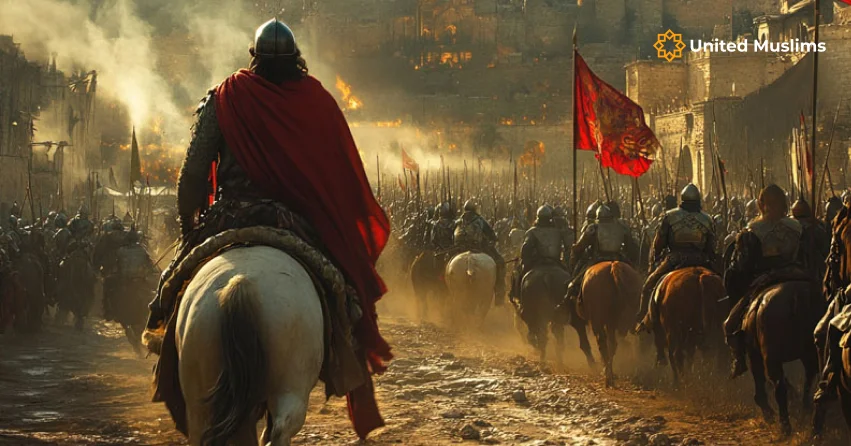
The Battle of Jerusalem in 1187 changed the Middle East forever. It shifted control of its Holy sites and made Sultan Saladin famous as one of the world’s greatest leaders.
But Saladin is remembered not just for military victory he’s remembered for how he led. His choices about mercy, unity, and faith offer lessons for Muslims today about what true leadership means, and how we carry that legacy forward through how we serve others.
Who Was Saladin?
Salahuddin Yusuf ibn Ayyub, commonly known as Saladin, was a Muslim ruler and military leader of the 12th century.
Born into a Kurdish family, he rose to prominence through his service under Nur al-Din. He later became ruler of Egypt and expanded his influence into Syria and surrounding territories.
Donate your zakat
Fulfil your obligation today – give Zakat and be a source of hope for those in need!
Building the Strength to Reclaim Jerusalem
Uniting the Muslim World
When Nur al-Din died in 1174, Saladin took on a mission far bigger than any single battle: uniting a fractured Muslim world. He spent over a decade bringing together divided regions before he ever attempted to retake Jerusalem because he understood a simple truth: a divided Ummah cannot win.
By 1175, the Caliph of Baghdad recognised him as the legitimate ruler of Egypt, Syria, and Yemen. Through alliances, marriages, and treaties, he built a unified front strong enough to stand against the Crusader states.
Strengthening the Ummah Through Education
Before he marched on Jerusalem, Saladin also invested in rebuilding society from within, funding schools, madrasas, and hospitals. He understood that a community without knowledge and strong institutions could not protect its future, even after achieving victory.
That same principle remains relevant today. To honour this legacy, we must invest in our people by supporting the education of young students and caring for orphans, helping every child gain the knowledge and opportunities to build a better future.
The Battle of Hattin and the Fall of Jerusalem to Muslims
The siege of Jerusalem in Islamic history cannot be told without the Battle of Hattin. In 1187, after the Franks attacked Muslim territories, an army of around 20,000 men met the Crusaders at Hattin. Outnumbered in resources but not in discipline, his forces won a decisive victory.
Mercy in the Moment of Victory
During the battle of Jerusalem, Saladin banned revenge against civilians outright. Christian residents were granted safe passage, churches were protected, and when poor families couldn’t afford the fee to leave safely, he paid it out of his own pocket.
This is the standard the Qur’an sets for us:
اِنَّ اللّٰهَ يَاۡمُرُ بِالۡعَدۡلِ وَالۡاِحۡسَانِ وَاِيۡتَآىِٕ ذِى الۡقُرۡبٰى وَيَنۡهٰى عَنِ الۡفَحۡشَآءِ وَالۡمُنۡكَرِ وَالۡبَغۡىِ
Indeed, Allah commands justice, excellence, and giving to relatives, and forbids immorality, bad conduct, and transgression.”
This principle was also reflected in the advice Saladin reportedly gave his son before his death:
Beware of shedding blood, trust not in that, for spilt blood never sleeps.
Centuries later, Muslims in Gaza are still waiting for that same spirit of mercy. Families are facing shortages of food, while many civilians remain trapped in unsafe conditions with little means to protect themselves. By supporting trusted Muslim charities like United Muslims, we can help vulnerable families overcome these difficulties.
Restoring Al-Aqsa Mosque and Fulfilling a Shared Legacy
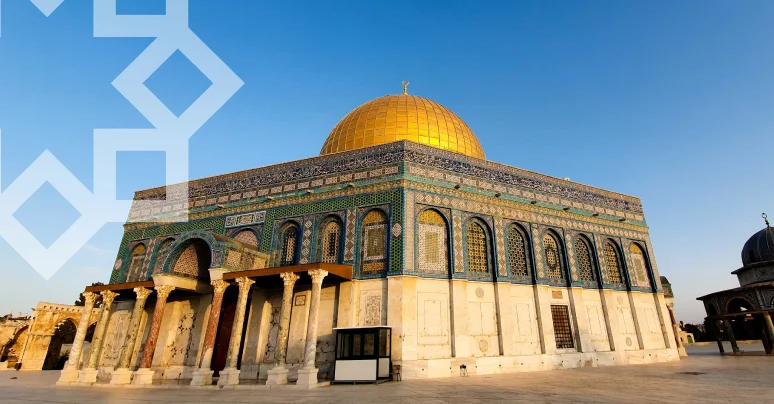
The Battle of Jerusalem stands as a historic turning point defined by the restoration of the Al-Aqsa Mosque compound.
As the first Qibla for early Muslims and the destination of the Prophet Muhammad’s (PBUH) miraculous Night Journey (Isra and Mi’raj), Al-Aqsa holds unmatched spiritual significance for Muslims worldwide.
Upon entering the city, Saladin immediately set out to re-establish the noble sanctuary (Al-Haram al-Sharif) for Islamic worship and installed the magnificent wooden minbar (pulpit) commissioned years earlier by his late predecessor and mentor, Nur ad-Din Zengi.
It showed that great leaders honour collective goals and build upon the noble efforts of those who came before them.
The Third Crusade: Negotiating with Enemies
Saladin’s capture of Jerusalem provoked the Third Crusade (1189–1192), led by Richard the Lionheart of England, Philip II of France, and Frederick Barbarossa of Germany.
Yet even during this prolonged conflict, Saladin did not abandon respect for human life. When Richard fell seriously ill, Saladin sent fresh fruit, ice, and his own physician to care for his rival. He also agreed to negotiate a peaceful settlement, reflecting his following of Quranic principle:
وَاِنۡ جَنَحُوۡا لِلسَّلۡمِ فَاجۡنَحۡ لَهَا
If the enemy is inclined towards peace, make peace with them.
The conflict eventually ended with the Treaty of Jaffa in 1192. Jerusalem remained under Muslim control, while Christian pilgrims were granted safe access to the city.
Saladin’s actions remind us that true Muslim leadership is not measured by how fiercely we defeat our enemies, but by how faithfully we uphold the teachings of the Quran.
True Leadership as a Trust (Amanah), Not Profit
When Saladin died in 1193, he left behind almost no personal fortune. He had given his wealth to the public and to his soldiers, viewing his authority as an amanah, a trust, rather than a tool for self-enrichment.
His Ayyubid dynasty ruled Egypt until 1250 and Syria until 1260, but his real legacy was never about land.
Carry the Legacy Forward
Saladin’s leadership through the Battle of Jerusalem teaches us that faith is not simply remembered through history, it’s lived through the way we care for others. He showed mercy to the vulnerable, invested in his people’s education, united the Ummah for a collective purpose, and viewed his power as a trust from Allah, not a tool for wealth.
When you give Sadaqah or emergency aid through United Muslims today, you’re answering that call. You’re choosing mercy over indifference, unity over division, and trust in Allah’s plan. Donate today and carry forward Saladin’s legacy of compassionate leadership.
Bringing hope through small acts of kindness—a meal, a helping hand, or a gift can light up a child’s day.
Frequently Asked Questions
Who ruled Jerusalem after Saladin?
After Saladin died in 1193, his brother Al-Adil ruled Jerusalem. The city later changed hands several times before coming under Mamluk control in 1260.
How did Saladin treat the Jews?
Saladin allowed Jews to return to Jerusalem after its capture in 1187. He permitted them to live and worship there under his rule.
Why is Jerusalem important to Muslims?
Jerusalem is home to Masjid al-Aqsa, Islam’s third-holiest site. It was also the first Qibla and the destination of the Prophet Muhammad’s (PBUH) Night Journey.
What was the biggest battle of the Crusades?
The Battle of Hattin in 1187 was among the Crusades’ most decisive battles. Saladin’s forces defeated the Crusader army, paving the way to Jerusalem.
Who built Masjid al-Aqsa?
Islamic tradition attributes the original foundation of Masjid al-Aqsa to Prophet Adam (AS), with later rebuilding associated with Prophets Ibrahim, Dawud, and Sulayman (AS).
