
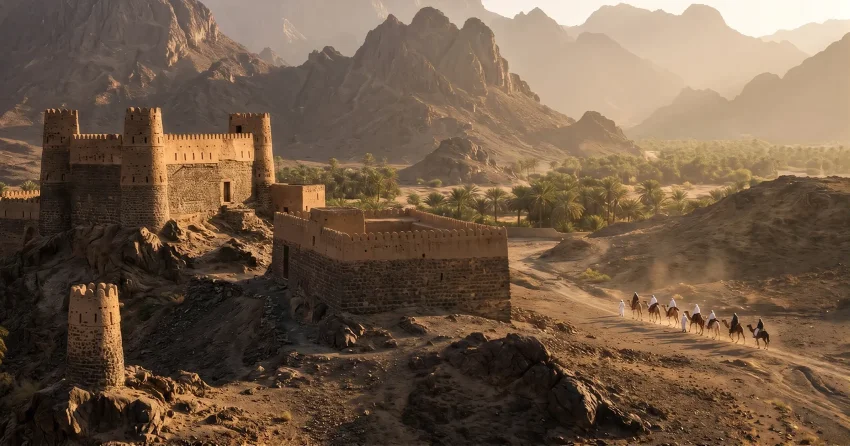
The Battle of Khaybar is remembered as one of the defining moments in Islamic history. It wasn’t just a military win. It helped strengthen the early Muslim community in Madinah by providing more security and economic stability. More than that, it demonstrated what true trust in Allah looks like under pressure. By understanding what happened at Khaybar, we gain a deeper appreciation of both its historical importance and its relevance today.
What Was the Battle of Khaybar?
To understand the history of the Battle of Khaybar, we must look at how tensions grew after the Muslims established their community in Madinah. A few years prior, leaders from the Banu Nadhir tribe were expelled from Madinah after breaking their peace treaty. Many of them settled in Khaybar, an oasis located roughly 150 kilometres north.
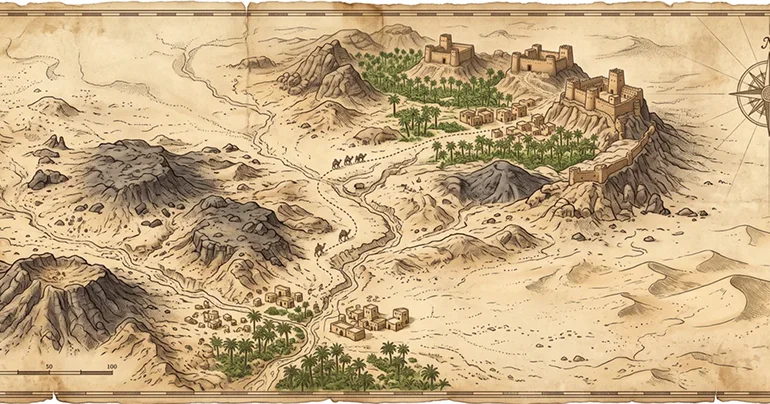
Khaybar was a wealthy agricultural centre famous for its date palm groves and stone fortifications, serving as a regional hub for trade and defence. However, it had also become a continuous threat to Madinah due to ongoing hostility from local groups.
With guidance from Allah (SWT), Prophet Muhammad (PBUH) planned and launched a carefully organised campaign to secure the Muslim community of Madinah without unnecessary bloodshed.
Donate your zakat
Fulfil your obligation today – give Zakat and be a source of hope for those in need!
The battle took place in 7 AH (628 CE), shortly after the Treaty of Hudaybiyyah. However, the Battle of Khaybar presented very different challenges compared to earlier battles. When the Muslim army of roughly 1,400 men arrived at Khaybar, they faced the challenge of confronting eight separate stone forts built across steep volcanic terrain rather than fighting in open desert. Understanding the importance of the Battle of Khaybar requires looking at how this campaign demanded strategic planning, with several key steps shaping the course of the battle:
Cutting Off Allies
First, the Muslims positioned themselves strategically to block the road between Khaybar and the Ghatafan tribe, preventing outside reinforcements from arriving to assist the fortresses.
Fort-by-Fort Siege
The Muslims surrounded the strongholds one by one. The siege lasted for several weeks as both sides traded arrow fire and engaged in fierce skirmishes outside the fort walls.
Breaching the Main Fort
The hardest target was Al-Qamus, the central stronghold. After several attempts to break its defences, the Prophet Muhammad (PBUH) announced:
لَأُعْطِيَنَّ هَذِهِ الرَّايَةَ غَدًا رَجُلًا يَفْتَحُ اللهُ عَلَى يَدَيْهِ، يُحِبُّ اللهَ وَرَسُولَهُ وَيُحِبُّهُ اللهُ وَرَسُولُهُ
“I will give this banner to a person at whose hands Allah will grant victory; a man who loves Allah and His Messenger (ﷺ), and Allah and His Messenger love him also.”
The following morning, he entrusted the banner to Ali ibn Abi Talib (RA). Moving like a storm toward the central citadel, Ali famously ripped a massive iron fortress door clean off its hinges, lifting it single-handedly to use as a shield to defeat the fortress champion, Marhab, in a single duel.
With their main citadel captured and key water supplies cut off, the remaining fortresses surrendered, bringing long-sought security to Madinah and ending the campaign.
The Aftermath and Terms of Peace
What followed the hard-fought victory says as much about Islamic principles as the battle itself. Rather than expelling the local population, the Prophet Muhammad (PBUH) allowed many of the residents to remain on their ancestral lands and continue farming under fair, mutually agreed terms.
In exchange for their labour, the farmers retained half of their annual yield, while the rest contributed to the economic stability of Madinah. This level of fairness after an intense conflict demonstrated how justice, honoured agreements, and ethical governance were meant to function, even in the wake of total victory.
What the Battle of Khaybar Teaches Us About Sustainable Giving
When reflecting on the key lessons of the Battle of Khaybar, two core economic and ethical principles emerge from the treaty that still guide how Muslims give today:
1. Building Self-Reliance (Sustainable Livelihoods)
At Khaybar, victory reflected long-term independence. By allowing local farmers to stay and work their land, the agreement built a self-sustaining local economy where families could feed themselves with dignity.
Today, millions face hunger not just from sudden emergencies but from a lack of ongoing resources. Providing farming tools, livestock, or clean water wells gives families the means to earn an independent living.
2. Donating and Seeking Blessings (Sadaqah)
The land agreements at Khaybar created ongoing community endowments (Waqf), where harvests continuously funded food and support for those in need across generations. This is the essence of Sadaqah: giving a gift that benefits others who are suffering.
َّثَلُ ٱلَّذِينَ يُنفِقُونَ أَمْوَٰلَهُمْ فِي سَبِيلِ ٱللَّهِ كَمَثَلِ حَبَّةٍ أَنبَتَتْ سَبْعَ سَنَابِلَ فِي كُلِّ سُنبُلَةٍ مِّا۟ئَةُ حَبَّةٍ
“The example of those who spend their wealth in the way of Allāh is like a seed [of grain] which grows seven spikes; in each spike is a hundred grains.”
Whether planting olive trees, drilling a community well, or building a school, your contribution becomes a continuous stream of reward for you and a permanent resource for a family in need.
Reflecting on the Battle of Khaybar with United Muslims
At United Muslims, we apply the economic and social principles of Khaybar directly to our global relief work. Preserving Islamic history and providing real-world relief are two sides of the same commitment.
Through sustainable livelihood programmes, clean water projects, and educational initiatives, we help vulnerable families transition from emergency aid to long-term self-reliance. When you support these projects, you help carry forward the ethical legacy of compassion and foresight established by the Prophet Muhammad (PBUH).
Conclusion
The Battle of Khaybar showed what faith, wise leadership, fairness, and patience look like under real pressure, and those qualities haven’t lost their relevance. They still guide how Muslims approach their families, their communities and their own struggles today.
Learning from Khaybar, and actually living out what it teaches, is how we keep faith with the Prophet Muhammad (PBUH) and those who stood beside him. United Muslims invites you to be part of that same legacy through the work we do for those who need it most.
Every act of charity, however small, carries forward compassion, unity and service that Islamic history has always stood for. Donate today with United Muslims and be part of that legacy.
Bringing hope through small acts of kindness—a meal, a helping hand, or a gift can light up a child’s day.
Frequently Asked Questions
Why did the Battle of Khaybar take place?
The Battle of Khaybar took place in 7 AH (628 CE) after the Treaty of Hudaybiyyah. The campaign was launched to address ongoing threats from groups in Khaybar that posed a risk to the safety and stability of the Muslim community in Madinah.
Why is the Battle of Khaybar important in Islamic history?
The Battle of Khaybar is important because it strengthened the security of the Muslim community, demonstrated the Prophet Muhammad’s ﷺ leadership and reinforced the Islamic principles of justice, patience and reliance on Allah.
What lessons can Muslims learn from the Battle of Khaybar?
The Battle of Khaybar teaches Muslims to trust Allah while making sincere efforts, remain patient during hardships, stand united as a community and uphold justice in every situation.
Which companion was given the banner during the Battle of Khaybar?
According to an authentic hadith in Sahih al-Bukhari, the Prophet Muhammad ﷺ gave the banner to Ali ibn Abi Talib (RA), saying that Allah would grant victory through him.
What happened after the Battle of Khaybar?
After the Battle of Khaybar, the Muslim community gained greater security and stability. Agreements were made with the local inhabitants regarding the cultivation of the land, reflecting the Islamic values of fairness and responsible governance.
