
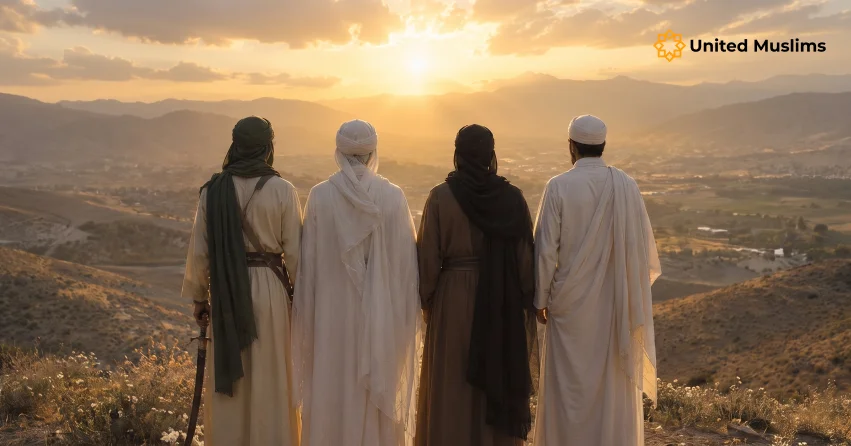
The caliph quotes we read today come from four remarkable leaders, Hazrat Abu Bakr, Hazrat Umar, Hazrat Usman, and Hazrat Ali, who shaped Islamic leadership in the decades after the Prophet’s (PBUH) death.
They were chosen for their character, not their status. Tested by responsibility and constrained by their fear of Allah, each caliph lived out a different lesson in accountability, generosity, and justice.
Their quotes reveal what happens when leaders prioritise service over power. Let’s explore what they teach us.
Why Caliph Quotes Still Matter?
The Khulafa-e-Rashideen (the Rightly Guided Caliphs) ruled from 632 to 661 CE, yet their caliph quotes speak to us today because they weren’t abstract philosophy; they were born from lived leadership.
The wisdom of companions of Prophet Muhammad that we find in these quotes wasn’t just spoken; it was practised. Each quote reveals how they handled power, responsibility, and their duty to others. That’s what makes them timeless.
Donate your zakat
Fulfil your obligation today – give Zakat and be a source of hope for those in need!
What were Hazrat Abu Bakr’s Quotes on Leadership?
Hazrat Abu Bakr (RA) was the first Caliph of Islam. He was known for his truthfulness and unwavering faith.
His understanding of leadership was rooted in humility and accountability. Rather than seeing his position as a source of personal authority, he viewed it as a responsibility entrusted to him by Allah. This is reflected in his famous words:
“I have been given authority over you, and I am not the best of you. If I do well, help me; and if I do wrong, set me right.”
This is among the most powerful caliph quotes because it reveals Abu Bakr’s understanding of authority. He did not present leadership as being above correction. Instead, he asked the people to support what was right and correct him when he was wrong.
Abu Bakr (RA) also showed that compassionate leadership does not mean compromising on Islamic obligations. During his caliphate, he firmly stood against tribes who refused to pay Zakat, recognising that as Muslims we should calculate and pay Zakat on time.
His leadership also placed a strong emphasis on protecting the vulnerable and ensuring that everyone received their rights. He said:
“The weak among you are strong in my sight so I will relieve their suffering as is their right, if Allah wills. The strong among you are weak in my sight so I will take what is due from them, if Allah wills.”
We can take this lesson into our own lives by looking beyond ourselves and finding ways to support vulnerable communities. Whether through donations, volunteering or supporting trusted charitable initiatives.
But accountability isn’t just about defending what’s right. It’s about answering for every detail, as Umar ibn Al-Khattab would show us.
How Did Hazrat Umar's Quotes Reflect Justice and Accountability?
Before he passed away, Abu Bakr (RA) consulted the senior Sahaba and elected Umar (R.A) as the second Caliph of the Muslims.
Umar governed a rapidly expanding Islamic state and oversaw major developments in administration, courts and welfare. Yet the larger his responsibility became, the more conscious he was of being answerable for it.
One of his famous quotes expresses that fear of accountability:
لَوْ مَاتَتْ شَاةٌ عَلَى شَطِّ الْفُرَاتِ ضَائِعَةً لَظَنَنْتُ أَنَّ اللَّهَ تَعَالَى سَائِلِي عَنْهَا يَوْمَ الْقِيَامَةِ
“If a lost sheep were to die on the banks of the Euphrates, I would expect Allah to question me about it on the Day of Resurrection.”
Imagine carrying the responsibility of an entire state and still worrying about a single lost animal.
That is what makes Umar’s example so powerful. He understood that accountability is not measured by the size of the problem. Even something small can reveal whether we have fulfilled the trust placed upon us.
He also taught:
حَاسِبُوا أَنْفُسَكُمْ قَبْلَ أَنْ تُحَاسَبُوا وَزِنُوا أَنْفُسَكُمْ قَبْلَ أَنْ تُوزَنُو
“Hold yourselves accountable before you are held accountable and evaluate yourselves before you are evaluated”
This was not advice reserved for rulers. It was a reminder for every Muslim to examine their own actions before standing before Allah.
Before we question someone else’s behaviour, we can question our own. Before demanding honesty from others, we can examine our own honesty. Before asking whether others have fulfilled their responsibilities, we can ask whether we have fulfilled ours.
This is one of the central lessons found in the best Islamic leadership quotes: leadership starts with accountability to Allah.
But what does accountability look like in action? Usman ibn Affan showed us through quiet, generous service.
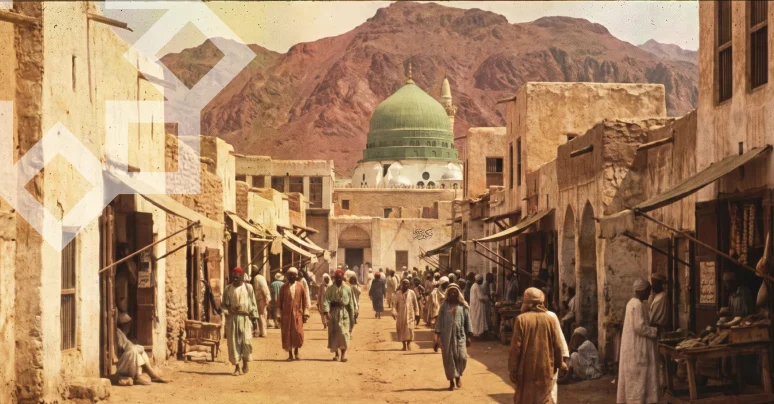
What Are the Best Hazrat Usman Quotes?
Before he passed away, Umar (R.A) appointed a six-man Committee to elect his successor from among themselves. After long discussions and consultation, they elected Hazrat Usman ibn Affan (RA) as the third Caliph of Islam.
He was known for his modesty, generosity and willingness to use his wealth for the benefit of the Muslim community. His purchase of the Well of Ruma is remembered as an example of providing an essential resource for the people of Madinah.
His understanding of service was not limited to wealth. A saying attributed to him highlights the acts he valued most:
“To feed the hungry, to clothe the naked, and to read and teach the Qur’an.”
There is something striking about the simplicity of this statement. Feed someone. Clothe someone. Teach someone.
No mention of recognition. No desire for applause. Just service.
Hazrat Usman’s legacy in leadership reminds us that true leadership is often found in quietly serving others, solving problems and creating lasting benefit for the community.
His generosity leaves us with a quiet but powerful lesson about Sadaqah.
True giving does not need to be large or seen. When it is sincere, done in silence, and offered only for the sake of Allah, even the smallest donation can grow into a lasting act of goodness that continues to benefit others long after we are gone.
Yet, generosity without wisdom can lead us astray. Ali ibn Abi Talib taught us that true strength comes from mastering ourselves, and that wisdom is the foundation of all just leadership.
What Are Hazrat Ali Quotes on Wisdom and Strength?
After Usman (R.A) passed away, Hazrat Ali (R.A) was elected as the fourth Caliph by the Muslims. During the period of the first three Caliphs, Madina continued to be the capital of the Muslim world, but Hazrat Ali (R.A) transferred the Islamic capital to Kufah in Iraq.
He led the Muslim Ummah during one of the most turbulent periods in early Islamic history. Political disagreement had divided the community, and his years as Caliph were marked by conflict and uncertainty.
Yet when we look at the teachings attributed to Ali, we repeatedly find a focus on knowledge, patience, character and mastery of the self.
One of the most widely quoted sayings of Hazrat Ali is;
وَاعْلَمْ أَنَّ الرَّعِيَّةَ طَبَقَاتٌ لاَ يَصْلُحُ بَعْضُهَا إلاَّ بِبَعْض، وَلاَ غِنَى بِبَعْضِهَا عَنْ بَعْض
“Know that the people consist of classes who prosper only with the help of one another, and they are not independent of one another.”
This reminds us that a strong community is built on mutual support. We all have different needs, abilities and responsibilities, but we depend on one another to thrive. We can follow this lesson by donating through reputable Muslim charities that provide donations and other forms of assistance to people facing poverty, hunger and hardship.
Another saying attributed to Ali states:
“The strongest amongst you is he who subdues his own self.”
We often think strength means overpowering another person, but this saying points towards something harder: controlling yourself when anger, pride or revenge tells you to react.
He also stressed that leadership is not limited to public positions or formal authority. A woman can lead within her household through education, patience and care.
Woman is a delicate creature with strong emotions who has been created by the Almighty God to shoulder responsibility for educating society and moving toward perfection. God created woman as a symbol of His own beauty and to give solace to her partner and her family.
His words remind us that leadership begins at home. By nurturing, educating and guiding those around us, we can shape families and communities for the better.
That is why his teachings remain an important part of inspirational quotes from Islamic history. They not only tell us how to lead others. They challenge us to lead ourselves.
What Can We Learn From Khulafa-e-Rashideen?
People still turn to the Rightly Guided Caliphs because their leadership was never about power. It was about responsibility, honesty, and service.
Similarly, for the first generation of Muslims, charity was not simply about giving money to those in need. It was connected to responsibility, sacrifice and accountability before Allah.
The Khulafa-e-Rashideen demonstrated these principles in different ways. Abu Bakr defended the obligation of Zakat when some tribes refused to pay it. Umar turned valuable personal property into a lasting charitable endowment. Usman used his wealth to provide essential resources for the Muslim community. Ali emphasised justice in the distribution of public wealth and the responsibility of leaders towards the poor.
Their examples show why the best Islamic leadership quotes are not merely words of inspiration. They reflect principles that were put into practice.
How Can We Carry Their Legacy Forward Through Sadaqah?
The wisdom found in these caliph quotes is not only about leadership. It also reminds us of our responsibility towards those who are struggling and in need. At United Muslims, we try to carry that same spirit into the work we do today, delivering Sadaqah, Zakat, Fitrana, and Qurbani to families in Gaza, Pakistan, and beyond.
Every gift, however small, follows the example set by the companions of the Prophet PBUH: given with dignity, without delay, and without expecting anything in return.
Give Sadaqah today and help carry their legacy of service forward.
Bringing hope through small acts of kindness—a meal, a helping hand, or a gift can light up a child’s day.
Frequently Asked Questions
Who were the four Khulafa-e-Rashideen?
The four Khulafa-e-Rashideen, meaning the Rightly Guided Caliphs, were Hazrat Abu Bakr As-Siddiq (RA), Hazrat Umar ibn Al-Khattab (RA), Hazrat Usman ibn Affan (RA), and Hazrat Ali ibn Abi Talib (RA).
What is the most famous quote of Imam Ali (RA)?
One of the most famous quotes attributed to Imam Ali (RA) is:
“People are of two types: either they are your brothers in faith or your equals in humanity.”
The saying is widely shared as a reminder of compassion, dignity and respect for others.
What was the role of a caliph in Islam?
A caliph was a leader responsible for guiding and governing the Muslim community after the death of Prophet Muhammad (PBUH). The role included upholding justice, protecting the community and ensuring that Islamic principles were respected.
Who was the last caliph?
Abdülmecid II was the last Ottoman caliph and is generally regarded as the last widely recognised caliph. He held the position from 1922 until the abolition of the Ottoman Caliphate in 1924.
