
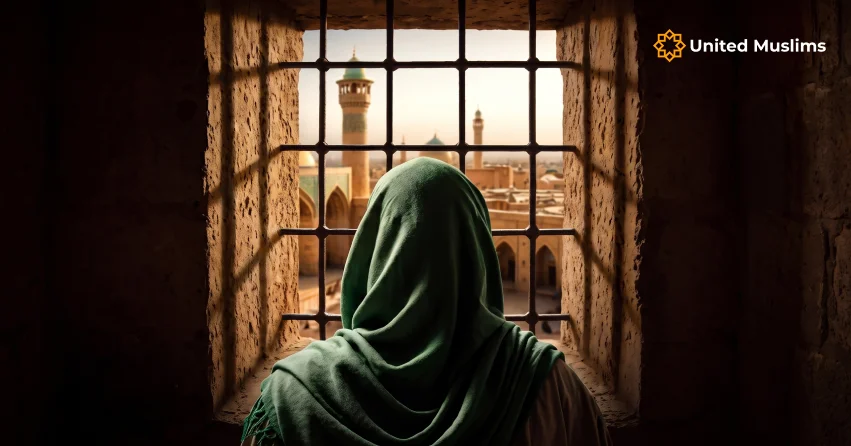
The story of Imam Hasan al-Askari takes us back to a time of political tension, religious scholarship and major change in the Muslim world. Born into the family of the Prophet Muhammad (PBUH), Hasan al-Askari was a descendant of the Prophet and spent much of his life in Samarra under close Abbasid supervision. Despite the challenges around him, he became known for his devotion, wisdom, patience and noble character.
Today, his life is remembered through his teachings, reported sayings, birth anniversary and the historic shrine in Samarra.
But what makes Imam Hasan al-Askari’s legacy powerful is this: every lesson he lived – patience under pressure, kindness toward others, and sacrifice for faith is a lesson Muslims today can embody through how they serve their communities.
Who Was Imam Hasan Al-Askari?
Imam Hasan Al-Askari was the son of Ali al-Hadi and a descendant of the Prophet Muhammad (PBUH).
According to the majority of historical sources, he was born in Medina in 232 AH. Imam Hasan Al-Askari’s birthday is commonly observed on the 8th or 10th of Rabi’ al-Thani, which shows why it is useful to distinguish between a commemorative date and an uncontested historical date.
The occasion is generally treated as a time to remember his life, character and teachings rather than simply mark a date on the calendar. Communities mark the day with gatherings, remembrance and reflection rather than large celebrations, a reflection of the restrained life he lived.
He became known as al-Askari because of his family’s connection to Samarra, the garrison city where the Abbasids kept them under close political supervision. He carried other titles too: al-Samet, meaning “the quiet one,” and al-Zaki, meaning “the pure,” both said to reflect how he conducted himself under constant watch.
Donate your zakat
Fulfil your obligation today – give Zakat and be a source of hope for those in need!
Growing Up Under Abbasid Watch
Hasan al-Askari did not grow up in an ordinary political environment. His father, Ali al-Hadi, had been brought from Medina to Samarra, and Hasan eventually lived there as well.
Samarra was then the Abbasid capital and an important centre of political power. Its archaeological remains today give an idea of the scale and importance of the city during that period. UNESCO describes it as one of the best-preserved examples of Abbasid city planning and architecture.
For Hasan al-Askari, however, Samarra was also a place where members of his family were closely watched. That setting gives another dimension to his reported emphasis on patience.
The Quran says:
وَٱصۡبِرۡ فَإِنَّ ٱللَّهَ لَا يُضِيعُ أَجۡرَ ٱلۡمُحۡسِنِينَ
“And be patient, for indeed, Allah does not allow to be lost the reward of those who do good.”
Patience, in this sense, is not simply waiting for difficulty to end. It is continuing to do what is right when circumstances are difficult.
What Did Imam Hasan al-Askari Teach?
Accounts of his teachings place considerable emphasis on faith, self-discipline, good conduct and helping others.
A saying attributed to him states that two qualities stand above others: belief in Allah and benefiting one’s fellow believers. This teaching is recorded in The Life of Imam Hasan al’Askari, a well-known biographical book.
That message fits closely with a broader Quranic principle. Allah says:
وَمَنۡ أَحۡيَاهَا فَكَأَنَّمَآ أَحۡيَا ٱلنَّاسَ جَمِيعٗاۚ
“Whoever saves a life, it will be as if they saved all of humanity.”
His reported teachings also encourage believers to look beyond outward appearances. Faith should affect the way a person speaks, behaves and treats other people.
The Prophet Muhammad (PBUH) also taught that the strongest believers are those with the best character. Abu Hurairah narrated that the Prophet (PBUH) said:
“The most complete of the believers in faith, is the one with the best character among them.”
Taken together, these teachings point towards a faith that is lived, not simply spoken.
Character and Quotes That Still Get Shared
What people remember most about Hasan Al-Askari is his character, not his politics. He taught people not to argue over small things, to think before they speak, and to stay calm even when someone tries to provoke them. These lines are often shared today as Imam Hasan Al-Askari quotes, valued for addressing everyday struggles rather than abstract ideas.
On guarding one’s tongue, he is attributed with the saying that “the heart of a fool is in his mouth,” while a wise person weighs their words before speaking (Source: Imam Al-Khoei Foundation).
On sincerity in friendship, another saying attributed to him states, “A believer is a blessing for a believer and an authority on an unbeliever,” a reminder that genuine faith should shape how people treat one another (Source: Al-Islam.org).
These teachings all point back to the same idea: character shows most in the moments that test it, not in what someone says about themselves. It is a standard that has not gone out of date.
How Did Imam Al-Askari Die?
According to traditional accounts, he was poisoned on the orders of the Abbasid authorities, dying in Samarra in 260 AH at around 27 years old. Because full historical certainty is hard to establish this far back, it is best understood as the traditional account rather than an undisputed fact.
His death has long been remembered as a martyrdom, although the precise circumstances surrounding it remain difficult to establish with certainty. The Quran offers language often turned to at moments like this:
وَلَا تَحۡسَبَنَّ ٱلَّذِينَ قُتِلُواْ فِي سَبِيلِ ٱللَّهِ أَمۡوَٰتَۢاۚ
“And never think of those who have been killed in the cause of Allah as dead.”
Imam Hasan Al Askari Shrine: From Burial Site to Heritage
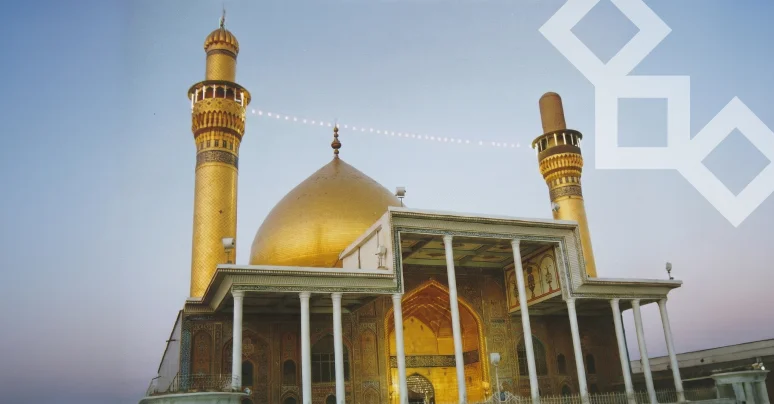
He was buried beside his father in Samarra, and their resting place grew into the Imam Al Askari Shrine, an important religious and historic landmark in Iraq. A dome was raised over the graves in 944 CE, with the golden dome added in 1905. The shrine complex also contains the burial places of members of Hasan al-Askari’s family and remains an essential part of Samarra’s religious and cultural heritage.
In 2006, the shrine was badly damaged in a bombing, one of many losses to sacred and heritage sites in the region during that period of conflict. Rebuilding sacred and community spaces after conflict rarely happens quickly. It is the kind of long-term recovery work United Muslims supports through its emergency appeals, reaching communities left to rebuild after the crisis.
What Can Muslims Learn From Imam Hasan al-Askari's Life?
His life offers several lessons that remain relevant today.
- Stay firm in your faith during difficult times, and continue to be patient, pray regularly and treat others with kindness.
- Let knowledge change the way you behave, making you more thoughtful, humble and useful to others.
- Correct people with kindness, because the way we advise someone can matter just as much as the advice itself.
- Look for ways to benefit the people around you, as helping others is one practical expression of faith.
- Give without seeking recognition. The Qur’an reminds us:
ٱلَّذِينَيُنفِقُونَأَمْوَٰلَهُمبِٱلَّيْلِوَٱلنَّهَارِسِرًّۭاوَعَلَانِيَةًۭفَلَهُمْأَجْرُهُمْعِندَرَبِّهِمْ
“Those who spend their wealth [in Allāh’s way] by night and by day, secretly and publicly – they will have their reward with their Lord.”
How Can We Put These Lessons Into Action Today?
Remembering a respected figure is meaningful, but putting his values into practice makes that remembrance more personal.
That could mean supporting someone who is struggling, helping a family access basic necessities, contributing to education or giving charity without expecting recognition in return.
This is where the work of United Muslims connects naturally with these principles. Through our charitable initiatives such as emergency appeals, clean water, sponsor a child and education, Muslims have opportunities to turn compassion into practical support for people facing hardship.
The Qur’an reminds us:
وَمَا تُنۡفِقُوۡا مِنۡ خَيۡرٍ فَلِاَنۡفُسِكُمۡؕ
“Whatever you ˹believers˺ spend in charity, it is for your own good.”
Giving is therefore not simply about what leaves our hands. It is also about the intention behind it and the good it can create for someone else.
Carrying His Legacy Forward
Imam Hasan al-Askari’s life was short, but remembered because he chose patience, knowledge, kindness and service over everything else. He lived under pressure and chose to benefit others anyway.
Today, Muslims can put those same values into practice by supporting people facing hardship, providing essential resources and helping communities build a better future. Through United Muslims, this can include supporting emergency aid, clean water, education, or help for families facing poverty.
When you give today, you are not just sending money. You are continuing his legacy of faith lived through action.
Bringing hope through small acts of kindness—a meal, a helping hand, or a gift can light up a child’s day.
Frequently Asked Questions
Who was Imam Hasan al-Askari?
Imam Hasan al-Askari was the son of Ali al-Hadi and a descendant of the Prophet Muhammad (PBUH). He lived mainly in Samarra during the Abbasid period and is remembered for his religious knowledge, devotion and character.
When is Imam Hasan al-Askari’s birthday celebrated?
Imam Hasan Al-Askari’s birthday is commonly observed on 8 Rabi’ al-Thani. Historical sources differ, however, on his exact date and year of birth.
Where is Imam Hasan al-Askari buried?
He is buried in Samarra, Iraq, beside his father, Ali al-Hadi. Their burial place later became the Al-Askari Shrine, an important religious and heritage site.
How did Imam Hasan al-Askari die?
Imam Hasan al-Askari died in Samarra in 260 AH. Traditional accounts hold that he was poisoned by the Abbasid authorities, although the precise circumstances are disputed in historical sources.
What can Muslims learn from Imam Hasan al-Askari’s life?
His life offers lessons in patience, self-control, humility, good character and helping others. His example can encourage Muslims to remain steadfast during hardship and turn their faith into positive action.
