
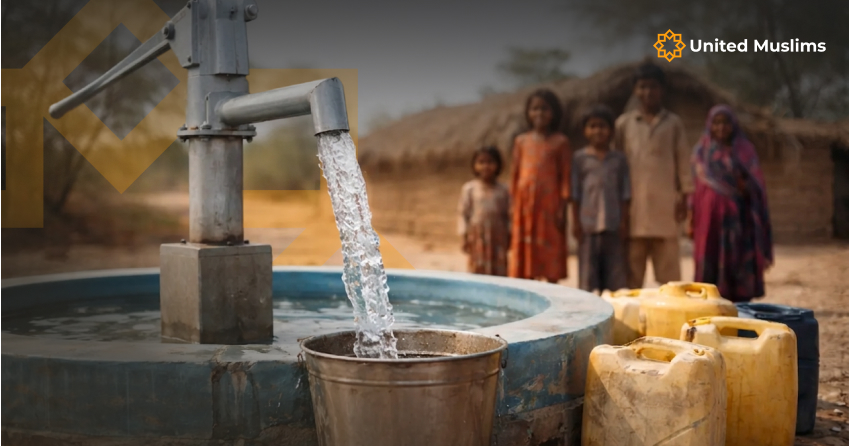
As we welcome the month of Muharram and the start of the Islamic New Year, many of us will be taking a moment to reflect. It’s hard to ignore how much heavy lifting the world is doing right now, with over 780 million people globally lacking access to clean water and millions across the Ummah displaced by ongoing humanitarian crises. In times like these, Muharram 2026 feels like a crucial moment for Muslim charity to step up and provide a vital lifeline where it is desperately needed.
As Muslims, distance has never been a barrier to our care. Our faith has taught us that we are all connected; in the end, our closeness to Allah is measured by our compassion, not the miles separating us from those suffering.
Why Muslim Charity is Central to Islam During Muharram
Islam commands us to help the poor in many ways. For instance, zakat is one of the five pillars of Islam, and its main goal is to help the poor by donating 2.5% of your qualifying wealth annually. It purifies the giver’s wealth by removing spiritual harm caused by hoarding. At the same time, it redistributes resources within the community.
Alongside zakat lies sadaqah, a form of voluntary Muslim charity. Unlike zakat, sadaqah can be given at any time and in any amount for almost any good cause. You can also pay Sadaqah online to help those in need. Allah says in the Quran:
“Who is it that would loan Allah a goodly loan? So He may multiply it for him many times over? And it is Allah who withholds and grants abundance, and to Him you will be returned.” (Surah Al-Baqarah 2:245)
Muharram 2026: A Time to Renew Your Charitable Intention
Muharram 2026 (1448 AH) begins on 16 or 17 June 2026, depending on the sighting of the moon. Every month in the Islamic calendar carries its own spiritual weight. Muharram carries a weight of sanctity, reflection, and renewal. It is the start of a new year and an invitation to reset how we live and give.
The Islamic New Year 1448: Setting Intentions to Donate Muslim Charity
Many Muslims let the new Islamic year slip past without much acknowledgement. Muharram 2026 is an invitation to change that, to turn an overlooked moment into a meaningful one.
Niyyah, or intention, is foundational to Islamic practice.
Begin the new Islamic year to:
- Give with intention, not impulse
- Notice the struggle around you that you’ve been walking past
- Pay any zakat you’ve delayed
Donate your zakat
Fulfil your obligation today – give Zakat and be a source of hope for those in need!
Honouring the New Year: A Look Back at Our Giving and Blessings
Muharram offers a time for honest self-assessment. Here are some questions to ask yourself before starting the new Islamic year:
- Did you give your zakat last year? If not, you can pay Zakat online with united muslims.
- Was your sadaqah thoughtful and consistent? Or was it reactive and occasional?
- Did you drop a few pounds into a collection box when you stood nearby one?
The Islamic tradition values muhasaba, which means self-accounting. We often tell ourselves that we are generous people. However, we check less often whether our actions match that belief. Muharram gives you an opportunity to check this honestly.
Aligning Personal Goals with Community Needs
One of the most practical things you can do at the start of the Islamic year is look outward. Check what your community needs right now. Don’t start with what’s convenient to give. Start with what’s needed.
See the needs of vulnerable people, research reliable charities working in active humanitarian crises, or find out if families in your local mosque or neighbourhood struggle quietly.
Align your personal goals with the needs of vulnerable people to turn Muharram from a date on the calendar into a lived commitment.
Lessons from Muharram and Ashura That Inspire Compassion
Muslims remember the events of Ashura, the tenth of Muharram, in different ways, yet all the narrations teach us that the greatest lessons are Islamic History, resilience in the face of injustice, and moral courage to stand against wrongdoing.
Sacrifice today means giving part of what you have to those who have nothing. It means choosing action when staying comfortable would be easier, because someone else’s dignity depends on it.
When you sit with the weight of what others are going through, something shifts. The distance between you and the vulnerable family begins to shrink. Your heart softens, and a heart softened by reflection becomes ready to give.
Also Read: From 1st Muharram to Ashura: The Journey of Imam Hussain to Karbala
5 Ways to Give During Muharram 2026
For modern-day Muslims, going into battlefields is not the only solution to help the oppressed. They can relive the spirit of sacrifice and stand up for their suffering Muslim brothers and sisters through the following ways:
- Donate Sadaqah online in Muharram and earn rewards that continue long after your donation reaches someone in need.
- Fulfil your obligation and purify your wealth by reaching those who need it most.
- Donate for water wells in remote areas. Only with a £550 donation can you provide a direct lifeline to up to 60 families.
- Sponsor an orphan during your donations in Muharram and change a young life through consistent support.
Final Reflection
Every dawn is a chance for renewal. Every Friday is a chance for a spiritual reset, while every Muharram offers a fresh start to the year.
Islam recognises something true about us: that we need regular opportunities to begin again. Not because past failures define us, but because they don’t. Muharram 2026 is one of those opportunities. So begin again now.
Muharram is the month to begin again. Make this Islamic New Year count, give your zakat, set up a monthly sadaqah, or support our active emergency appeals. Every pound you give to United Muslims reaches those in need; 100% of your donation goes to the cause, with admin costs covered separately.
Bringing hope through small acts of kindness—a meal, a helping hand, or a gift can light up a child’s day.
Frequently Asked Questions
Why is Muharram 2026 important for Muslims?
Muharram 2026 is important as it encourages Muslims to reflect on faith, renew intentions, and increase acts of charity and compassion.
What is the importance of zakat in Islam?
Zakat is one of the five pillars of Islam. It purifies wealth and helps redistribute resources to support the poor and needy.
What is sadaqah and how is it different from zakat?
Sadaqah is a voluntary charity in Islam, while zakat is the obligatory 2.5% annual charity due on qualifying wealth. Sadaqah can be given at any time and in any amount.
What lessons can be learned from Muharram?
Muharram teaches sacrifice, patience, empathy, and standing against injustice, all of which inspire greater compassion and charity.
What is the concept of muhasaba in Islam?
Muhasaba means self-accountability. It involves reflecting on one’s actions and assessing whether they align with Islamic values.
