
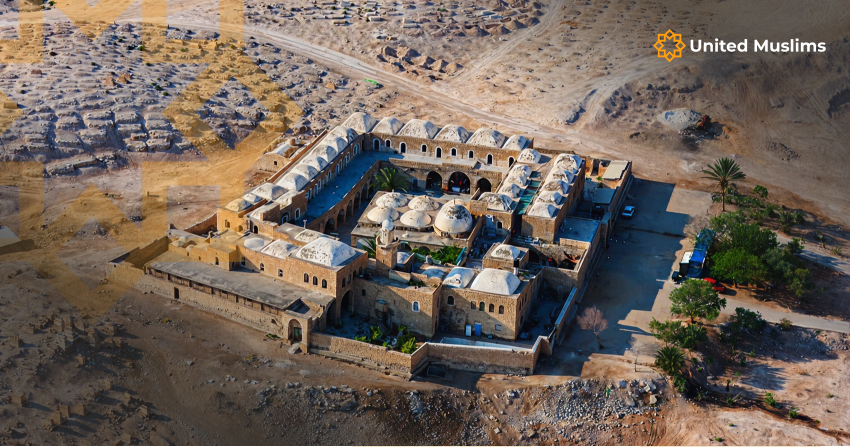
Prophet Musa’s (AS) story is one of courage, struggle, and faith. It moves from palace halls to deserts, from fear to freedom. Every step of his path reveals how Allah’s plan works in ways we can’t always see. Musa had to deal with power, loss, doubt, and even times when he was angry, but he always went to Allah.
We at United Muslims think that the story of Prophet Musa has important lessons to teach us. His story teaches us that real strength comes from being patient, trusting, and standing firm when life tests you.
Early Life and Upbringing
Musa’s birth came at a dark moment for the Israelites. Pharaoh ruled tyrannically. He ordered that all newborn Israelite boys be killed. His mother placed him in a basket to save Musa and sent him down the Nile. Allah guided the basket to the palace. Pharaoh’s family adopted him.
One day, Prophet Musa (AS) saw an Egyptian treating an Israelite badly. He took a stand against the oppression, but it backfired. So he fled to Egypt in fear. He left Egypt to escape punishment. He travelled to the land of Midian. There, he helped some women water their flocks. They invited him home. He lived with their family. He married one of the daughters. He worked as a shepherd in Midian for many years.
One day, God spoke to him at the burning bush. Musa heard the voice say: “Go to Pharaoh, demand freedom for your people.” This was the beginning of his prophetic work.
Mission to Pharaoh
Musa returned to Egypt armed with signs from Allah. He showed Pharaoh miracles, like his staff turning into a serpent, his hand glowing white, but Pharaoh denied and challenged him.
Musa asked his brother Harun (Aaron) to assist. They both confronted Pharaoh and his court. They said, “Let my people go so they may worship Allah.”
Pharaoh made fun of and tortured Musa’s supporters. But Musa stayed strong. He believed in Allah’s promise. He put up with insults, tests, and jail time. Finally, Allah commanded Musa to lead the Israelites out of Egypt. The Exodus began.
Pharaoh chased them with his army. The path led to the Red Sea. The people panicked, thinking they were trapped. Musa said, “Fear not. Allah is with us.” He struck the sea with his staff. The waters parted. The Israelites passed through on dry land. Pharaoh’s army followed. The waters closed on them. They perished.
Musa led his people into the wilderness and guided them to Mount Sinai. There, Allah gave him the Tablets (Torah) with commandments. Even though they were given a lot of good things, the Israelites often complained, rebelled, and forgot quickly. Musa had to repeatedly remind and guide them.
Donate your zakat
Fulfil your obligation today – give Zakat and be a source of hope for those in need!
The Journey Toward More Profound Knowledge
One of the most striking stories about Musa is his meeting with Al-Khidr (Khidr), which appears in Surah Al-Kahf (Quran). Allah told Musa that there was someone more knowledgeable, Khidr. Musa asked his servant, Yusha (Joshua), to come along. He said,
“I will not rest until I reach the meeting point of the two seas, even if I travel for ages.”
They carried a fish in a vessel. The fish acted as a sign. When it slipped away into the sea, that would mark the meeting point. They reached that spot, but they forgot the fish. It jumped off and swam away. They awoke and realised the fish was gone. Musa told his servant to bring their food. His servant admitted he forgot because of Satan.
Musa recognised that they had missed the sign. He and Yusha retraced their steps until they found Khidr, where the fish had gone.
Musa asked Khidr: “May I follow you so you teach me what you have been taught?” Khidr replied: “You will not be patient with me. How will you endure what you do not fully grasp?” Musa insisted: “If Allah wills, I will be patient. I will not disobey you.”
Khidr accepted, on one condition: Musa should not ask about anything until Khidr explains it himself. Thus began their journey of lessons.
Three Trials When Things Seem Wrong
1. The Ship
They boarded a boat. Khidr made a hole in it. Musa could not contain himself and said, “You damaged it to drown its people?” Khidr reminded him: “Did I not tell you you would not be patient?”
2. The Boy
They walked further and saw a youth. Khidr killed him. Musa exclaimed: “You killed an innocent soul without cause!” Khidr again said: “I warned you you wouldn’t have patience.” Musa begged to continue, promising not to question again. But he added, “If I ask later, let me part ways with you.”
3. The Wall
They reached a town. The people refused to host them. Khidr saw a wall ready to collapse. He repaired it. Musa said, “You could have asked for payment.” Khidr replied: “Now we part ways. I’ll explain your doubts.”
At that moment, Musa knew their journey ended.
Unveiling the Wisdom
Khidr then explained his actions. He acted by Allah’s command, not by his own whims.
- The ship: It belonged to needy people. A cruel king would seize every boat. So Khidr damaged it slightly to prevent its seizure.
- The boy: His parents were believers. Allah feared the boy would grow up to oppress or reject belief. So it was better to replace him with a more righteous child.
- The wall: Beneath it lay treasure belonging to two orphan boys. Their father was righteous. Allah wanted them to reach maturity before they found it. So Khidr repaired the wall so it remained hidden until the proper time.
Khidr said, “I did none of this of my own will. Allah commanded me. You could not be patient with what you did not know.”
This story shows us that what looks unfair or incorrect may actually be mercy, wisdom, or God’s purpose. At Palestine charity, we believe every hardship teaches us something. Every kind act brings Allah’s mercy. When you give to charity, Zakat UK, or share food, you bring hope to others.
Also Read:Importance of Charity in Islam
Bringing hope through small acts of kindness—a meal, a helping hand, or a gift can light up a child’s day.
Lessons and Reflections
1. Knowledge is more than what meets the eye
We judge by what we see. Allah judges by unseen causes, wisdom, and larger outcomes. Many events hide deeper reasons that we can’t perceive.
2. Being patient is important
Even a Prophet like Musa slipped when seeing something unjust. In pursuit of knowledge, we must restrain impulse, avoid judgment, and balance curiosity with humility.
3. Respect those with deeper insight
Musa asked permission. He accepted the conditions. He humbled himself. That respect allowed him to gain insight beyond what he knew.
4. Trust in Allah’s plan
Losses or difficulties may shield us from greater harm. Challenges may prepare us for the greater good. We need to trust Allah’s wisdom over our limited sight.
5. Be humble with mentors
Even prophets apologised for their slip. We should be honest, careful, and open to learning when we talk to instructors, not judge them.
6. Divine mercy operates beyond time
The treasure under the wall remained hidden until the right moment. Allah’s mercy may be delayed for wisdom’s sake.
Applying this story today
- When something hurts you, loss, rejection, failure, pause. What may seem like ruin might be a shield.
- Before judging others’ actions, consider that you don’t see all the reasons.
- Seek knowledge from books, life, trial, and reflection.
- When you depend on someone wiser, humble yourself and listen more.
- Be patient when outcomes are delayed. A hidden blessing might be unfolding.
When we help others, we remember the patience and kindness that Prophet Musa (AS) taught us. You can give to charity, share a meal, pay your Zakat UK, or support a Palestine charity. Every act of giving shows your trust in Allah’s plan and mercy.
Guidance from Prophet Musa (AS)
Prophet Musa’s life has many stories: his struggle in Pharaoh’s court, his leadership of his people, and his reception of the Torah. The meeting with Khidr is unique. It shows that seeking divine wisdom demands humility, patience, and trust.
We don’t know everything right now. But if we commit to sincerely seeking, respect those who know more, and trust Allah’s timing, we might be able to see more of it.
May Allah give us the strength to walk with humility, to seek actual knowledge, and to trust in His plan.
