
Qurbani has a deep significance in Islam. Muslims perform it every year to fulfil the Sunnah of Prophet Ibrahim (AS), who was willing to sacrifice his son in obedience to Allah Almighty.
The right way to perform Qurbani is to have pure intention and follow the Shariah. It is a profound spiritual exercise that requires your complete attention for it to be accepted by Allah.
This guide explains how to perform Qurbani correctly, step by step.
Understand the Meaning of Qurbani
The word ‘Qurbani’ comes from ‘qurb’, which means ‘nearness’. The person performing Qurbani is essentially seeking closeness to Allah. It symbolises your submission and willingness to give something you value for Allah’s sake.
Remember the story of Prophet Ibrahim (AS)? His love for his son was immense, but his love for Allah was greater. He passed a tremendous test of faith by being willing to sacrifice his beloved son, Ismail (AS), for Allah. Our Qurbani reflects this spirit. We purchase an animal, then sacrifice it in Allah’s way to declare that we place Him above everything.
Know When to Perform Qurbani
The time for Qurbani begins after the Eid al-Adha prayer on the 10th day of Dhul Hijjah. It ends at sunset on the 12th of Dhul Hijjah.
You cannot slaughter your animal before the Eid prayer. Doing this invalidates the Qurbani, and the animal becomes ordinary meat. You must then perform a new Qurbani, so always wait for the Eid prayer to conclude.
Donate your zakat
Fulfil your obligation today – give Zakat and be a source of hope for those in need!
Check If Qurbani Is Wajib for You
Qurbani is Wajib if you meet the following three conditions:
- You are a sane adult Muslim.
- You meet the Nisab threshold, which is the value of 612.36 grams of silver or 87.48 grams of gold.
- You must own this wealth beyond your basic needs, such as a home, clothes, a vehicle, etc.
Calculate your Zakat-eligible wealth to see if you meet the Nisab. The head of the household performs one Qurbani for the family, covering all dependents.
Choose the Right Type of Animal
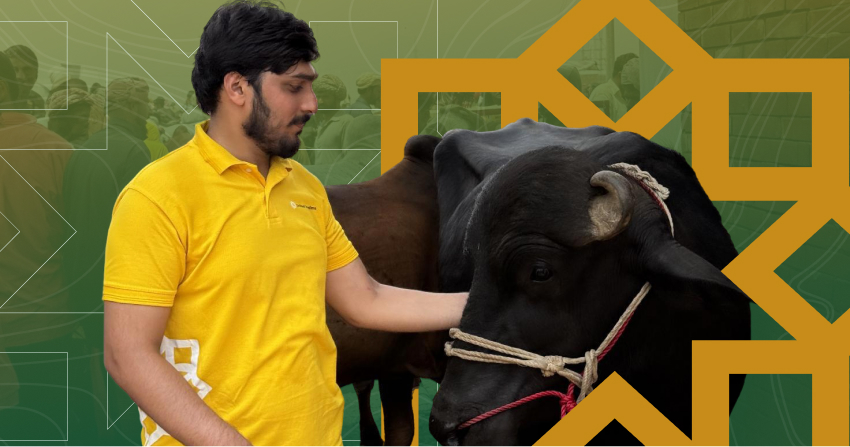
You can sacrifice camels, cattle, goats, and sheep. One sheep or goat is usually affordable for one household. On the other hand, seven people can share larger animals like a cow or camel.
- A sheep must be at least six months old.
- A goat must be one year old.
- A cow must be two years old.
- A camel must be at least five years old.
You can check the animal’s teeth to confirm its maturity.
In addition, Prophet Muhammad (PBUH) specified four defects that the animal must not have. A one-eyed or sick animal with obvious illness is unacceptable. An animal that cannot walk well or is extremely weak is also unacceptable.
Intention (Niyyah)
Perform Qurbani with the intention of obeying Allah and following the Sunnah of Ibrahim (AS), not to impress others. You do not need to speak it aloud. The most important thing is your internal commitment because Allah knows what’s in our hearts.
If the Qurbani is obligatory, intend for that. If it is voluntary, intend for that. Your intention determines whether your Qurbani will be accepted or rejected.
Kind Treatment of the Animal
The animal is Allah’s creature. You must provide it with a proper place to rest, some shade, and clean water. Feed it adequately and handle it gently.
The journey to slaughter should be calm. Do not let the animal see the slaughter knife. It’s a Sunnah to sharpen the knife away from the animal to minimise its fear.
Your compassion reflects your faith. Treat the animal with the respect it deserves because gentle treatment is part of the worship.
The Slaughtering Process
Only a Muslim should perform the slaughter with a sharp knife.
Position the animal on its left side and point its head towards the Qibla. Hold the knife firmly to make a single, swift cut. Sever the windpipe, oesophagus, and jugular veins, but do not sever the spinal cord to ensure a quick death.
Recite the name of Allah during the cut. Say: “Bismillahi Allahu Akbar.” This Tasmiyah is mandatory, as forgetting it invalidates the sacrifice.
Let the blood drain completely. Wait until the animal stops moving before you start skinning. Show patience and respect to honour the life taken in Allah’s name.
Dividing the Meat
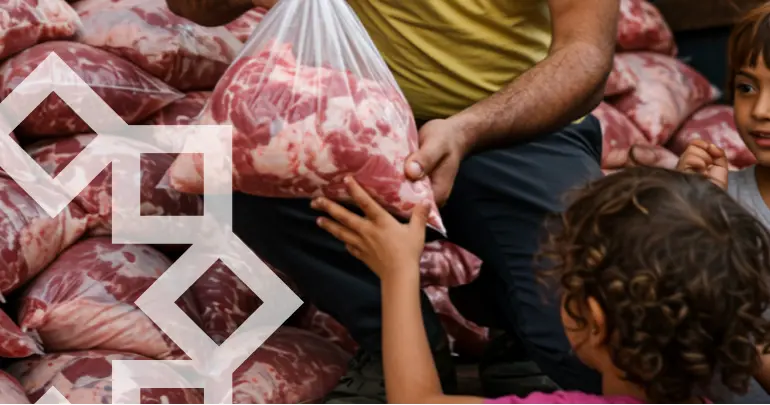
The recommended way to distribute meat consists of three parts. Keep one-third for your family. Give one-third to friends and neighbours, and give one-third to the poor and needy.
This distribution embodies Islamic values of celebrating with your family, strengthening community bonds, and supporting the less fortunate.
You cannot sell the meat or pay the butcher with it, although you can give him a portion as a gift. Many organisations handle meat distribution among the poor. You can also give meat to them to ensure your Qurbani benefits those in need.
Bringing hope through small acts of kindness—a meal, a helping hand, or a gift can light up a child’s day.
Make Your Qurbani Count This Eid
Qurbani is an act of worship and kindness. Do it with pure intentions and follow the entire procedure carefully, from choosing the animal to meat distribution. Be kind to the animal and share the meat in large amounts.
Let this sacrifice bring you closer to Allah. Remember what the Sunnah of Ibrahim (AS) teaches us and get into the spirit of giving. May your Qurbani bring you countless blessings this Eid.
Turn your sacrifice into a source of happiness. Donate your Qurbani and help feed families.
FAQs
When is the correct time to perform Qurbani?
Qurbani must be performed after the Eid al-Adha prayer on the 10th of Dhul Hijjah and before sunset on the 12th of Dhul Hijjah. Slaughtering before the Eid prayer is invalid.
Who is required to perform Qurbani?
Qurbani is Wajib for any sane, adult Muslim who possesses wealth above the Nisab threshold (the value of 612.36g of silver or 87.48g of gold) after covering basic needs.
What animals are permitted for Qurbani?
Sheep, goats, cows, buffalo, and camels are all permitted for Qurbani if they meet the following age requirements:
- Sheep: 6 months+
- Goats: 1 year+
- Cows/Buffalo: 2 years+
- Camels: 5 years+
Can multiple people share one Qurbani animal?
Yes. Up to seven people can share a cow or camel, as long as each person intends Qurbani. Sheep and goats, however, are for one person only.
Who should perform the slaughter?
Only a Muslim, knowledgeable about Islamic slaughtering rules, should perform the Qurbani. If you cannot perform it yourself, a trusted organisation may do it for you.
